Help with your home’s brickwork
A homeowner’s guide to repointing in Staffordshire
Gaps between your bricks or mortar falling out? You may need repointing, but not necessarily across the whole house. Here’s what to look for and what happens next.
Repointing means removing damaged mortar — the material between your bricks — and replacing it with suitable fresh mortar. Healthy joints help your wall resist the weather.
Key takeaways
- Missing or loose mortar deserves a closer look; sound mortar can often stay.
- Damp, broken bricks and a moving wall need more than a fresh mortar finish.
- Compare what each quote includes, especially access, protection and extra repairs.
Five signs your brickwork might need repointing
Look from a safe ground-level position. You do not need to scrape the joints, climb a ladder or get onto the roof to make a useful first enquiry.
Mortar is visibly missing
You may see open gaps or deep hollows between the bricks. These can leave the wall more exposed to rain. Take a wide photograph to show whether the gaps are in a few patches or spread across the wall, then ask about repair.
Mortar is crumbling or coming loose
Loose pieces in the joints or fresh mortar debris below the wall are worth checking. Do not pick more out to test it. Older lime mortar is naturally softer than cement mortar, so softness on its own does not mean it has failed.
Gaps or cracks have appeared between bricks
A cracked joint may need repair, but a new or widening crack can also mean the wall is moving. Photograph and date any changes. Seek structural advice for new or growing cracks rather than assuming fresh mortar will fix the cause.
Windows, chimneys or exposed walls look worse
Weathering may be concentrated around openings, on a rain-facing wall or on a chimney. Ask for these areas to be checked along with the surrounding bricks and details that keep water out. Photograph chimneys from the ground, not from the roof.
The same area keeps getting wet or deteriorating
Repeated damp marks, staining or flaking brick faces need investigation. Missing mortar may be involved, but leaking gutters, downpipes or other defects can be the real cause. Sound-looking mortar beside a damp patch is a reason to check elsewhere, not automatically repoint it.
What should I do about what I’ve found?
Use these examples to choose a sensible next step, not to diagnose the wall. If the mortar is sound and nothing is changing, age or an uneven colour alone is not a reason to remove it.
A few small patches of missing mortar
What it might mean: A local repair may be enough.
What to do: Show the affected patches and the whole wall. Ask whether the remaining mortar can stay and how the repaired areas would blend in.
Loose or missing mortar across much of a wall
What it might mean: One wall or a larger area may need repointing.
What to do: Ask for the condition of each side of the house to be checked. A badly weathered side wall does not prove the sheltered walls need the same work.
Damp indoors but the mortar looks sound
What it might mean: Investigate where the moisture is coming from.
What to do: Note when the damp appears, especially after rain. Have gutters, downpipes, drains and other possible causes checked before buying a repointing job as a damp cure.
Broken bricks or crumbling brick faces
What it might mean: Brick repair or replacement may be needed too.
What to do: Include the damaged bricks in your photographs. Ask whether their repair is included in the quote; filling the joints will not repair a broken brick.
A leaning wall, bulging brickwork or an unstable chimney
What it might mean: Keep clear and seek urgent specialist advice.
What to do: Keep people away from loose or falling masonry and contact an appropriate structural professional. Do not climb closer to inspect it or wait for a routine repointing quotation to establish whether it is safe.
What happens when a house is repointed?
A proper job involves more than spreading new mortar over old joints. These are the five stages to discuss before work starts.
Look at the wall and agree the work
The wall’s condition, earlier repairs and access need checking. Agree which areas need repointing, which can stay and whether any damaged bricks or other defects need attention first. Ask for this to be clear in the written quote.
Set up safe access and protect nearby areas
Depending on the job, this may involve scaffolding and protection for windows, doors, paths and plants. Agree how you will get in and out, where equipment can go and what needs moving out of the way.
Carefully remove the damaged mortar
Old mortar is taken out far enough for the new material to hold properly, while avoiding damage to brick edges. This is usually the noisy, dusty part. Ask how dust will be controlled and how nearby people will be kept away from the work.
Put in suitable fresh mortar and finish it
The joints are prepared and filled with mortar suited to the bricks and the wall. The finished shape, colour and texture matter too. A small sample area can help you agree the appearance before a large wall is done.
Protect the fresh work and explain aftercare
New mortar needs protection while it hardens. Ask how coverings, waste removal and final tidying are handled, when protection can come down and whether you need to do anything afterwards. The answers should suit the mortar and the weather, not a one-size-fits-all timetable.
Noise, dust and living in the house during the work
Repointing can be noisy and dusty, especially while old mortar is being removed. Exterior work often allows you to stay at home, but access, open windows and use of the garden may be affected. If you work from home, ask when the noisiest tasks are likely to happen.
Dust is a health issue, not just something to wipe off a windowsill. HSE warns that removing mortar with grinders can create very high levels of silica-containing dust. Its guidance calls for suitable on-tool extraction and respiratory protection for workers. Extraction reduces dust but does not capture all of it. Ask how the contractor will control it and protect people nearby.
Scaffolding may be needed for upper walls or chimneys so the work can be reached safely. Height is not the only factor: the amount of work and the ground below matter too. Ask whether access equipment is included in the price and how it could affect doors, parking or a shared path.
Windows and the garden
Ask what protection is planned for glass, frames, doors, paths and planting. Agree which windows should stay closed during dusty work without blocking essential ventilation. Move garden furniture and pots if needed, and keep children and pets away from the work area.
Weather and the schedule
Frost, heavy rain and rapid drying in sun or wind can damage fresh mortar. Work may need to pause or remain covered. Ask for an expected programme that includes access setup and weather allowances, rather than treating the proposed finish date as certain.
Aftercare and tidying
Ask when the wall can be left uncovered and whether any dampening or other care is needed. Do not pressure-wash fresh joints or remove protective coverings early. Confirm who clears debris and whether a final visit is planned after the mortar has had time to harden.
How much does repointing cost — and why do quotes differ?
A small patch repair should not be priced like a whole house. The amount of mortar to remove and replace is important, but safe access, preparation and extra repairs can make two similar-sized jobs cost quite different amounts.
Your price should be based on the work your home needs, rather than a figure for an average house. These three example jobs explain what changes the cost. Ask for a written quotation that sets out what is included so you can compare like with like.
A small, low-level repair
A few damaged joints beside an accessible path involve less mortar removal and filling than a full wall. There is still setup, protection and tidying to allow for. Matching an older mortar or replacing a damaged brick can add work even when the repair area is small.
A side wall with work at height
There are more joints to prepare and fill, and upper brickwork may need scaffolding. A narrow passage, conservatory or sloping ground can make access more involved. The quote therefore covers equipment and safe working arrangements as well as the repointing itself.
A whole house or an older property
Several walls mean more labour, materials, protection and potentially more scaffold. Older bricks may need particularly careful removal of previous hard repairs, suitable lime mortar and sample work. Damaged bricks or heritage requirements add tasks of their own, rather than simply more square metres of pointing.
- Check that each quote covers the same walls and clearly identifies any areas left untouched.
- Compare the mortar, preparation and finish, not just the total price.
- Check whether scaffolding, window and garden protection, waste removal and any brick repairs are included.
- Ask how unexpected damage discovered during preparation would be discussed and priced before extra work goes ahead.
Will the whole house need doing?
No, not necessarily. It may be sensible to repair a few patches, repoint one weathered wall or tackle several walls if the mortar is widely damaged. A sheltered back wall may still be sound even when the front looks tired.
Ask why each area is being recommended for repair. Removing sound mortar unnecessarily can damage the edges of bricks, especially on older houses. SPAB advises that uneven weathering often calls for local repairs rather than wholesale repointing.
Appearance is worth discussing too. Fresh mortar may look different at first, and a patch repair can remain visible. Ask about matching colour, texture and the shape of the joints, ideally with a sample. A completely uniform colour is not a good reason on its own to remove sound original mortar.
Older houses: do you need lime rather than cement mortar?
Many older houses were built with lime mortar. It is generally softer and allows moisture to pass through more readily than hard cement-rich mortar. That can suit older, softer bricks, helping the joints weather rather than the brick faces.
A mortar that is too hard or too resistant to moisture can make old bricks deteriorate faster. The answer is not simply to order the strongest mix. Ask someone experienced with your type of house to check the existing bricks, original mortar and earlier repairs, then explain the proposed material in plain English.
Existing hard pointing is not always safe to remove all at once: taking it out can damage the bricks. SPAB recommends a trial before attempting removal. A small sample also helps check how new mortar will look.
If your home is listed, speak to the local authority’s Conservation Officer before work starts and obtain any required consent. Repairs that affect its special character can need listed building consent; do not assume that calling work ‘like for like’ makes it exempt. Ask about local requirements if your home is in a conservation area too.
What should you ask a repointing contractor?
A useful quote makes it clear what will happen to your house. You should be able to understand it without knowing building terminology. These questions help you compare proposals fairly.
Choose relevant experience and a clear explanation, not just a smooth-looking finish in a photograph. If a quote mentions a survey, ask what it covers; a brickwork assessment is not automatically a structural engineer’s report.
- Have you worked on homes with bricks and mortar like mine, and can I see comparable examples?
- Which areas need repair, which can stay and what makes you recommend that amount of work?
- What mortar and finish are you proposing, why do they suit my wall and can we agree a sample?
- Are damaged bricks and any other repairs included, or priced separately?
- How will you arrange safe access, control dust and protect windows, paths and the garden?
- What working hours and likely programme should I expect, and what happens if the weather delays things?
- What insurance covers this work, and can you provide current evidence for any credentials you mention?
- What is included in the total, what is excluded and who handles waste, final tidying and aftercare?
Real examples: what the photographs can tell you
Staffordshire Pointing is part of Cheshire Pointing Group Limited. These examples come from the Cheshire Pointing project archive, with their original locations and job types kept clear.
The photographs show different views, so they are best read side by side, not as a perfectly aligned comparison. Look at the mortar finish and the work described, rather than assuming every tired-looking wall needs the same treatment.
A chimney needs more than a new mortar finish
Cheshire — original project archive
Genuine photographs from the Cheshire Pointing project archive; Staffordshire Pointing is part of Cheshire Pointing Group Limited. This is not a Staffordshire project.
The first photograph shows damaged upper brickwork and broken mortar around decorative chimney pots. The later photograph shows renewed upper courses and a new mortar bed while the repair is under way. Cracks in the pots remain visible; the later view is not presented as a fully finished or safety-certified chimney.
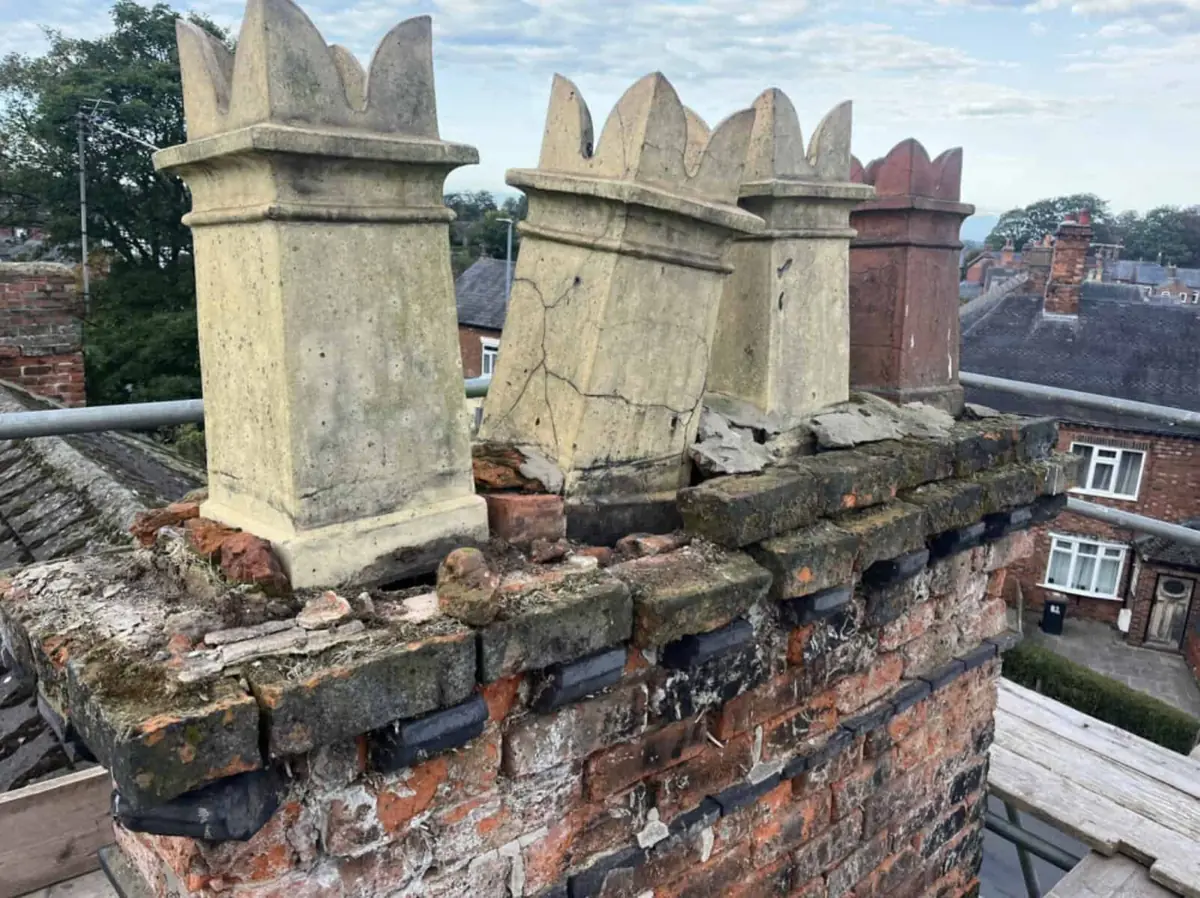
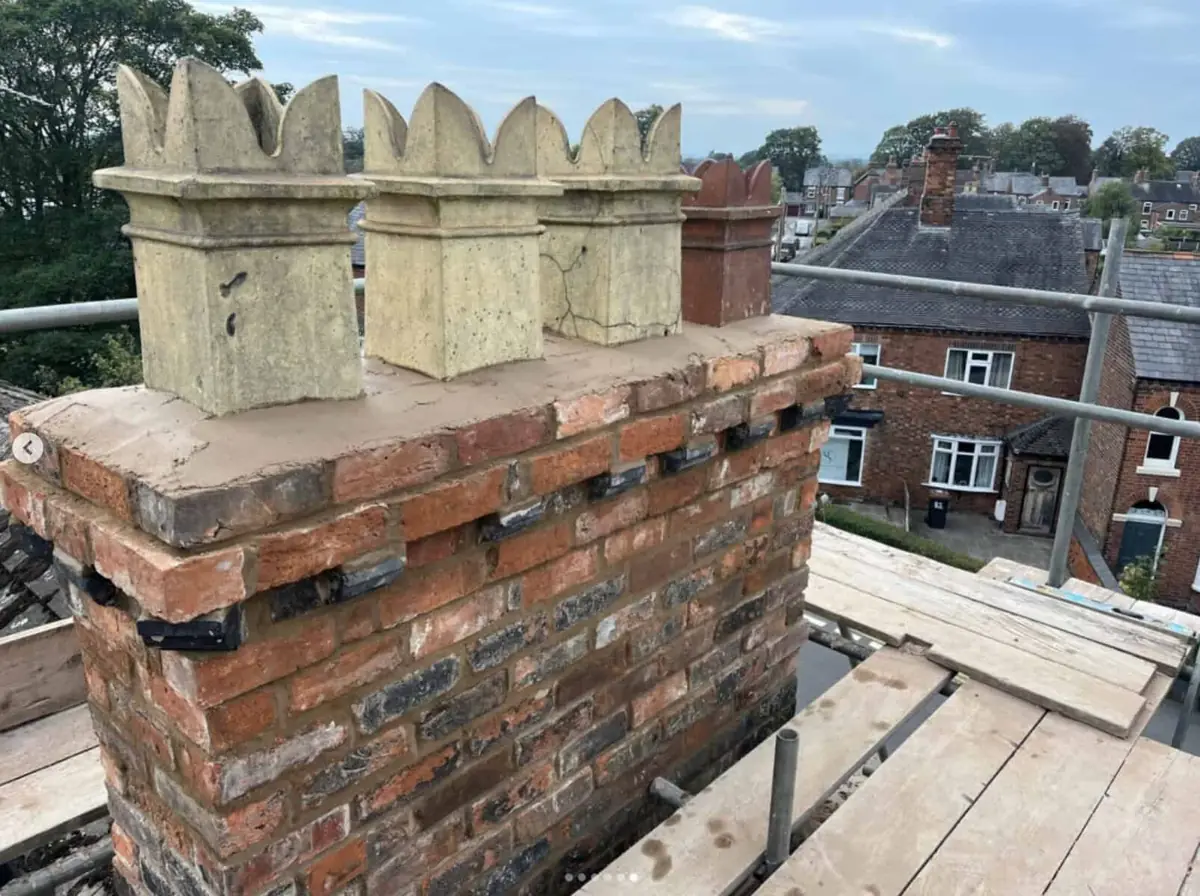
What this example shows: Pointing the joints and repairing the chimney top are different jobs. Ask which bricks, pot supports and roof details need attention, and what remains to be done. These photographs do not identify the mortar mix or certify a flue or appliance.
Read the full Cheshire — original project archive case studyCoach house repointing
Cheadle, Cheshire
From the Cheshire Pointing project archive; Staffordshire Pointing is part of Cheshire Pointing Group Limited.
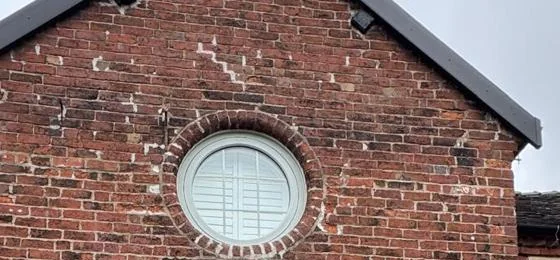
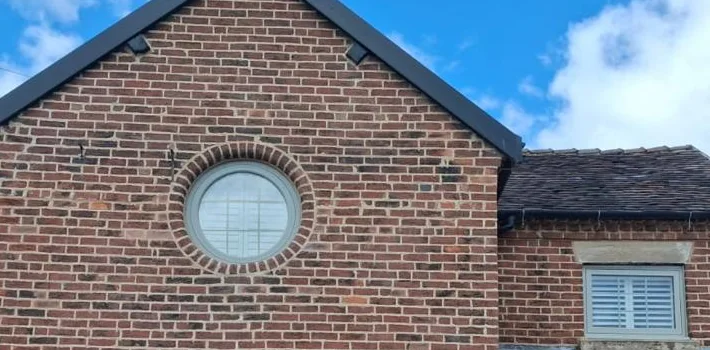
The before view shows irregular white patches of old pointing and uneven joints. The completed view shows a more consistent mortar finish. This coach house is in Cheadle, Cheshire.
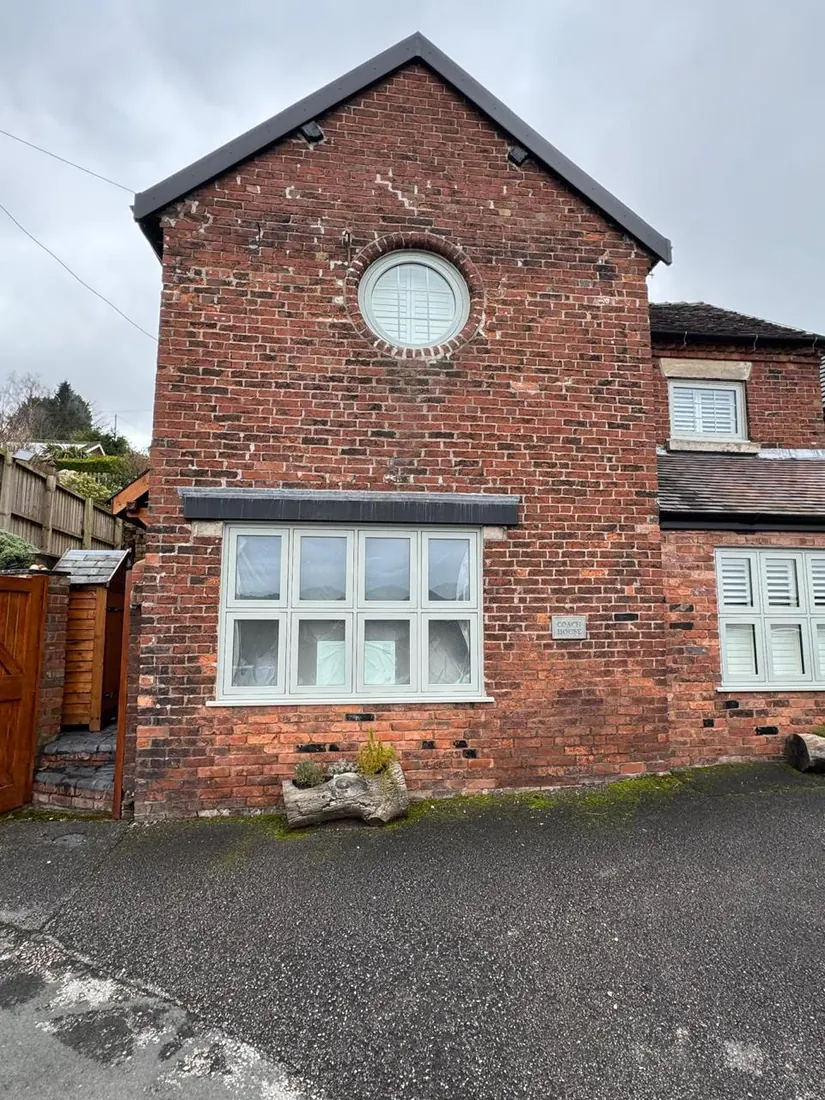
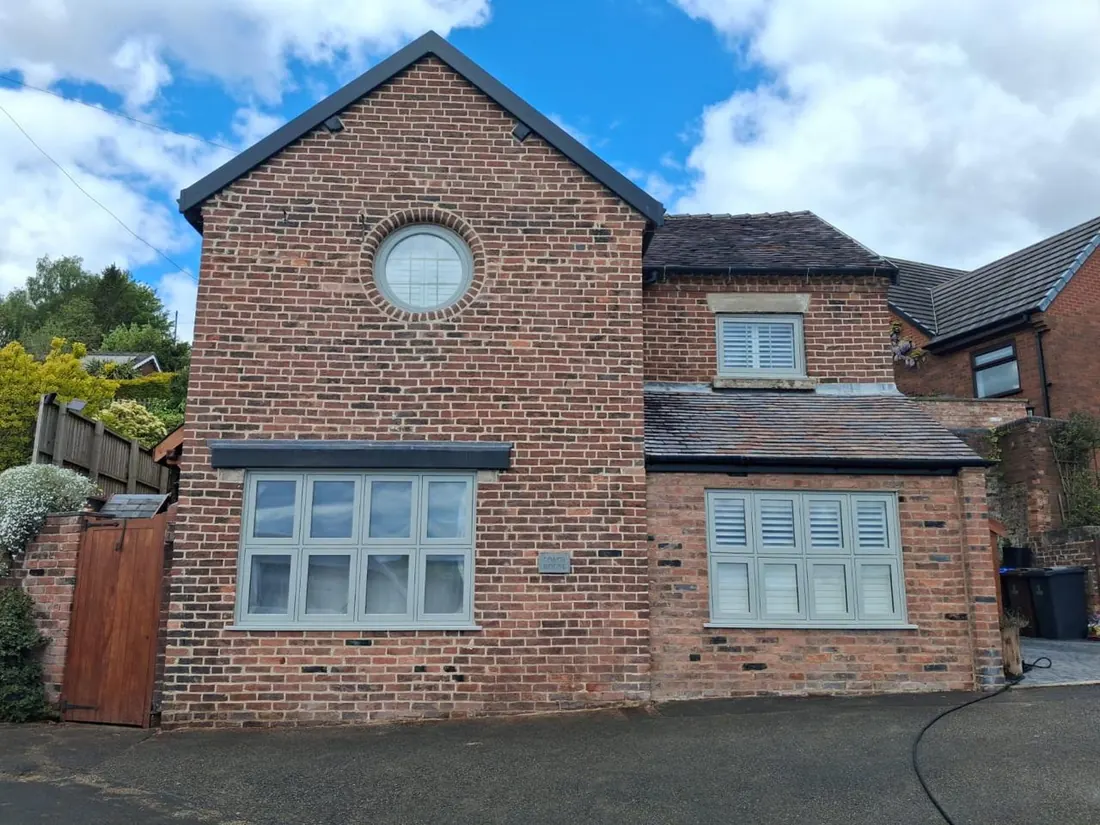
What this example shows: Previous patch repairs can leave a wall looking uneven. Discuss both the condition of the remaining mortar and how any new finish will blend in; appearance alone does not decide how much needs removing.
Read the full Cheadle, Cheshire case studyExecutive new-build cleaning and repointing
Leek, Staffordshire
From the Cheshire Pointing project archive; Staffordshire Pointing is part of Cheshire Pointing Group Limited.
This Leek project combined cleaning and repointing as part of finishing a new-build home before handover. It is an example of preparing new brickwork for completion, not repairing a weathered older house.
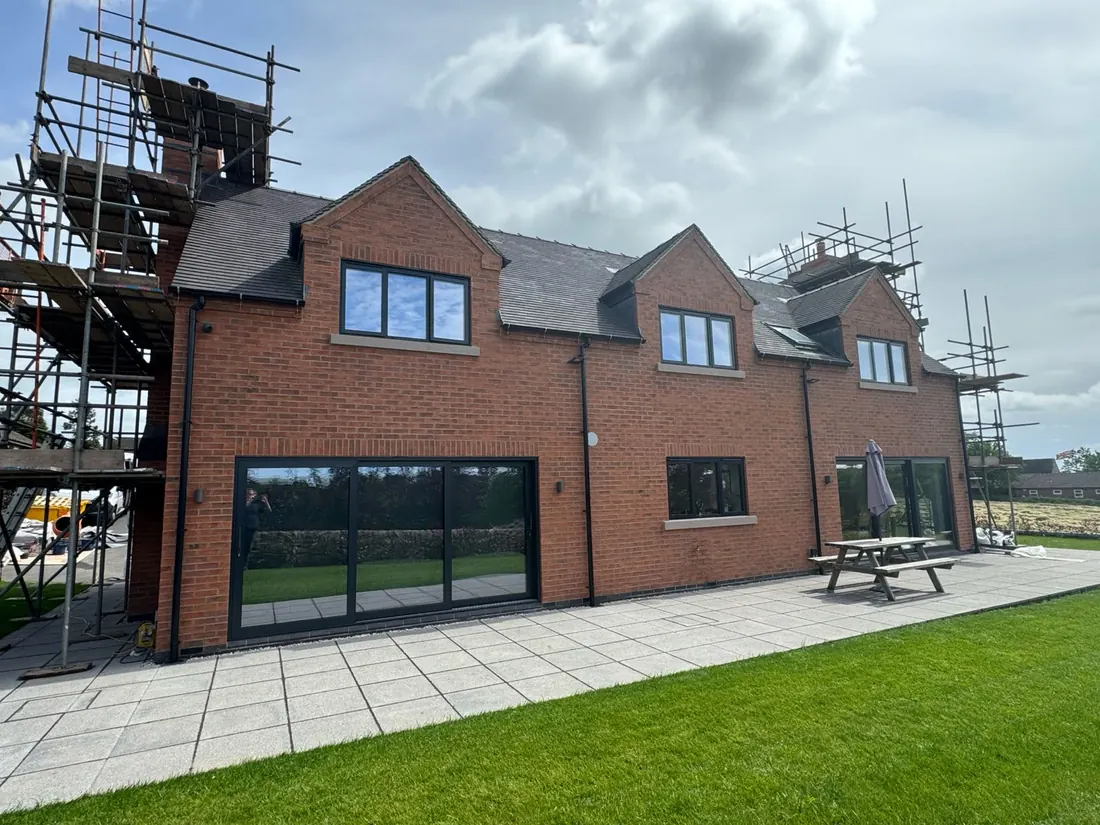
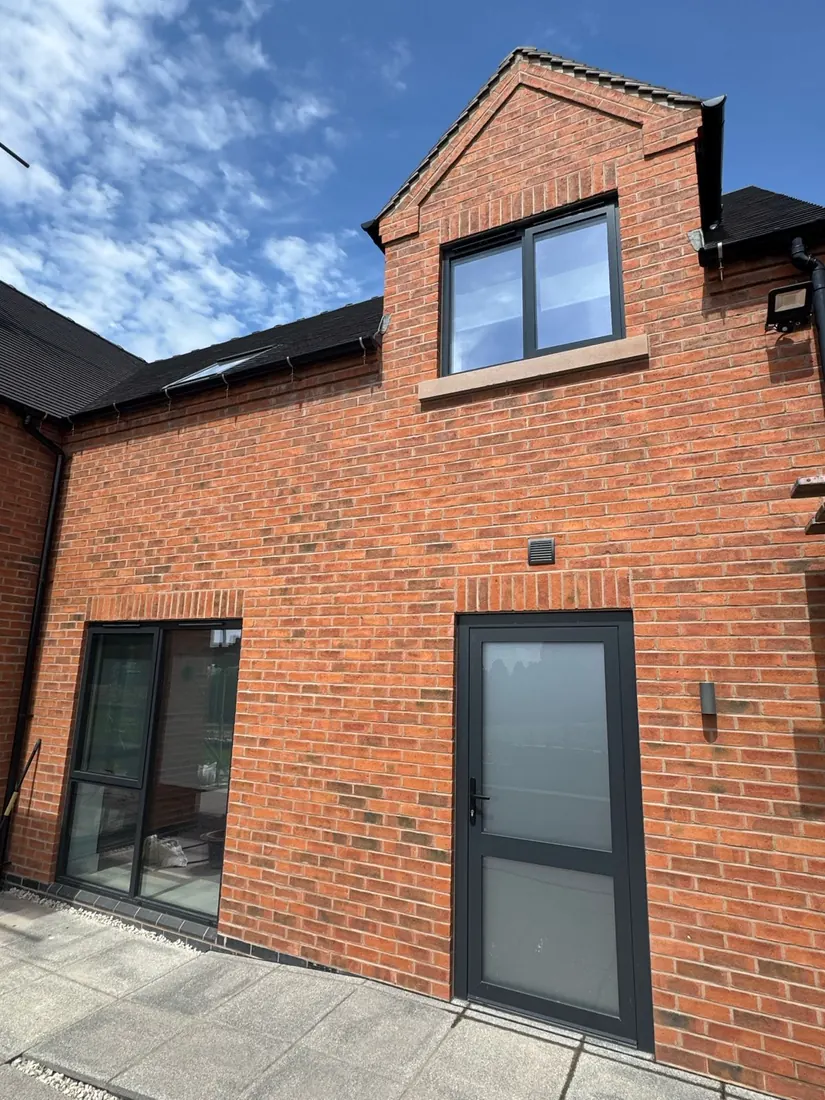
What this example shows: A job can involve improving the finish as well as renewing mortar. When comparing a combined cleaning-and-repointing quote, ask what each part covers rather than treating it as the same job as a small mortar repair.
Read the full Leek, Staffordshire case studyReady to ask about your own brickwork?
You do not need to know the name of the mortar or the right building terms. ‘Pieces are falling out below the window’ or ‘this patch looks worse after rain’ is a useful place to start.
Have your postcode, a photograph of the whole wall and a closer view ready if you can take one safely. Say what you have noticed, when it started and whether it seems to be getting worse. Mention any known listed status or difficult access too.
Common questions
What homeowners often ask.
How long does it take to repoint a house?+
A few local repairs involve much less work than several walls. Removing old mortar, arranging scaffold, repairing bricks and protecting fresh work all affect the programme. Ask for an expected schedule, including setup and tidying, and how weather delays would be handled.
Is repointing messy?+
Yes, removing old mortar creates debris and can create hazardous silica dust. Ask about on-tool extraction, protection for nearby surfaces and keeping people away from dusty work. Dust control reduces the mess and risk; it does not mean there will be no dust.
Will I need scaffolding?+
Upper walls and chimneys may need scaffold or other suitable access equipment. A small ground-level repair is different. The contractor should explain the safe access plan and whether its cost is included in the quote.
Can you repoint just part of a wall?+
Yes. Local repairs can be sensible when the surrounding mortar is sound. Ask which areas need doing and how the colour and finish will blend with the rest of the wall.
Can repointing stop damp?+
It can help when damaged mortar is letting rain into the wall. It will not fix every cause of damp, such as a leaking downpipe or a ventilation problem. Find the source of moisture before deciding what repair to buy.
Will the new mortar match the old mortar?+
Colour, texture and the finished shape of the joints can be matched as closely as practical. A sample area helps agree the result. Fresh mortar can look different while it hardens, and an exact invisible match is not something to assume.
Can repointing be done in winter?+
Winter makes the work harder to plan because frost and wet weather can damage fresh mortar. SPAB recommends avoiding winter repointing where possible. Ask how suitable conditions and protection will be arranged, and expect the work to pause if conditions are unsuitable.
What is the difference between pointing and repointing?+
Pointing is finishing the mortar joints between bricks or stones. Repointing means taking out worn or damaged mortar from the face of existing joints and replacing it. It is not simply covering failed mortar with a thin new layer.
Do I need lime mortar for an older house?+
Many older houses need a suitable lime mortar, particularly where the original mortar is lime and the bricks are soft. Ask for the existing materials and previous repairs to be checked. The proposed mix should suit your wall, not be chosen by age alone.
What should I ask before accepting a quotation?+
Ask which areas are included, what mortar and finish will be used, and whether scaffold, protection, brick repairs and waste removal are covered. Check the likely schedule, aftercare and relevant insurance. Make sure you know how any additional work would be agreed before it starts.
Sources behind the advice
Where to read more
We’ve used the following guidance for the repair, conservation and safety advice in this article. These organisations are references, not the authors of this page.
- The Society for the Protection of Ancient Buildings (SPAB)Repointing
Advice on retaining sound mortar, local repairs, suitable materials, trial areas and protecting fresh work from unsuitable weather.
- Historic EnglandRepairing Walls of an Older Home
Advice on checking damp causes, using appropriate repair materials and seeking structural-engineer advice for cracking, bulging or leaning walls.
- Historic EnglandListed Building Consent
Explains when listed building consent is needed and why to consult the local authority’s Conservation Officer before work.
- Health and Safety ExecutiveWorking at height: introduction
Guidance on properly planned and supervised work by competent people using suitable access equipment.
- Health and Safety ExecutiveConstruction dust: chasing concrete and raking mortar
Warns that removing mortar can produce very high levels of silica-containing dust. Explains on-tool extraction and worker respiratory protection, and that extraction does not capture all dust.
Your brickwork
Not sure what needs doing? Start with what you’ve noticed.
Use the quotation form when you are ready to send your property details, or call if you would rather start with a conversation. Photographs help explain the problem, but a visit may be needed before the work and final price can be agreed.
We aim to respond to website enquiries within 48 hours. If you are concerned about loose or unstable masonry, keep clear and seek appropriate urgent advice rather than waiting for an enquiry response.