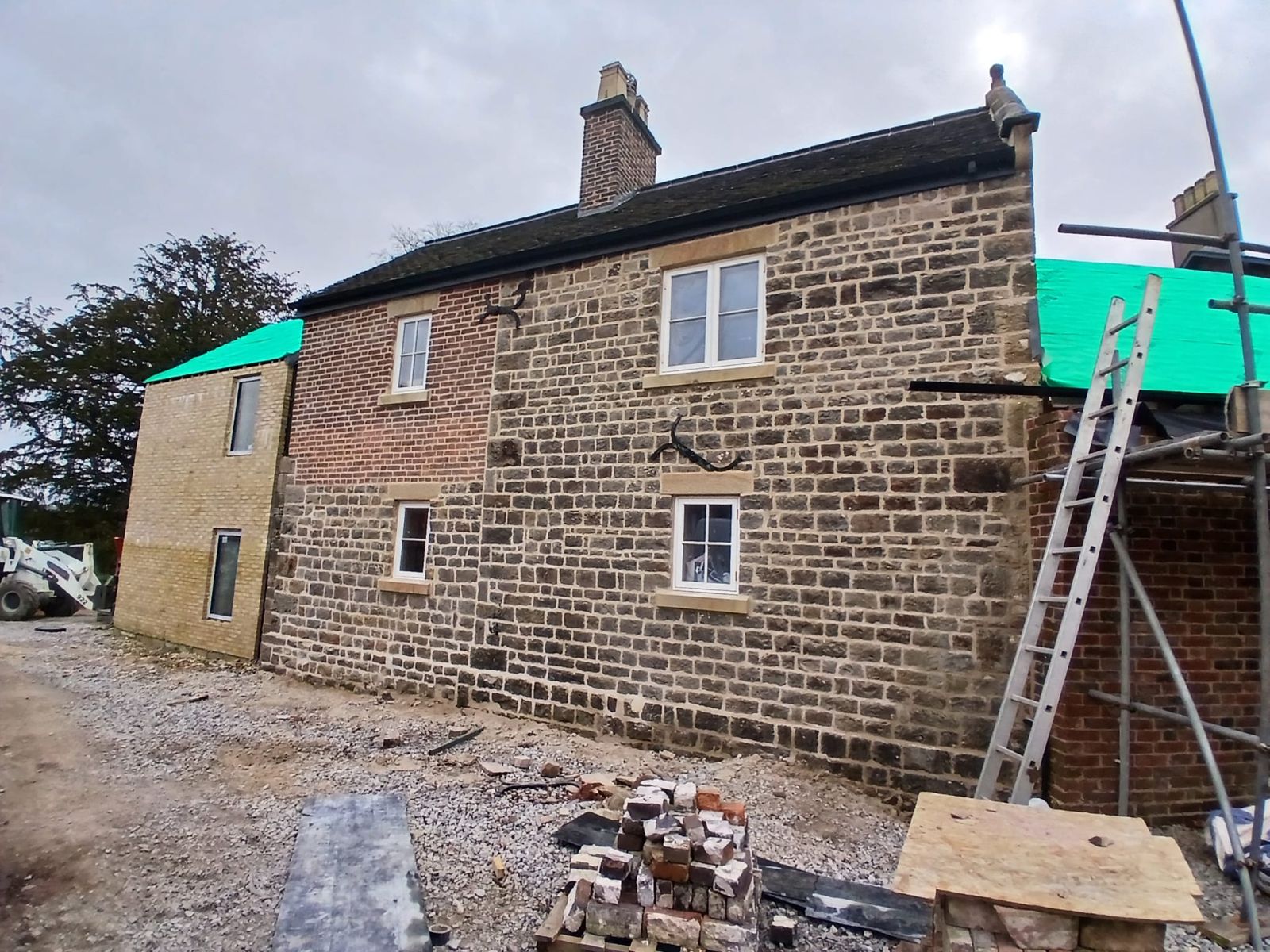
Focused masonry repair
Where deterioration is local and the surrounding stack is sound, the agreed work may focus on specific brickwork, failed joints or a weathered upper detail rather than removing material that is still performing well.
Staffordshire Pointing is part of the Cheshire Pointing Group Limited, (established 2003).
Chimney repair
For weathered, damaged or uncertain chimney stacks, a clear route starts with safe access, the masonry that remains and the roofline details that surround it.
A clear starting point
Chimney repair can involve local brickwork and mortar repairs, upper-stack rebuilding, or renewal of the mortar bed around chimney pots. The appropriate scope depends on the retained masonry, safe access, roof junctions and flue use. Damp or cracks do not establish the cause from a photograph alone. Apparent instability or uncertain appliance safety needs appropriate specialist advice; do not climb to inspect the stack or use a flue whose safety is uncertain.
A considered service
High-level brickwork has to cope with exposure, rainwater, wind and the connection between the stack and roof. A visible crack, loose pot or damp mark can be an important prompt, but the useful discussion also includes the upper brickwork, mortar, pot beds, roof junction and whether a flue remains in use.
The aim is to understand what is genuinely affected before deciding whether a focused repair, upper-stack renewal, rebuilt detail or another form of specialist assessment should be considered. Safe access and the individual construction guide the next step.
Discuss your property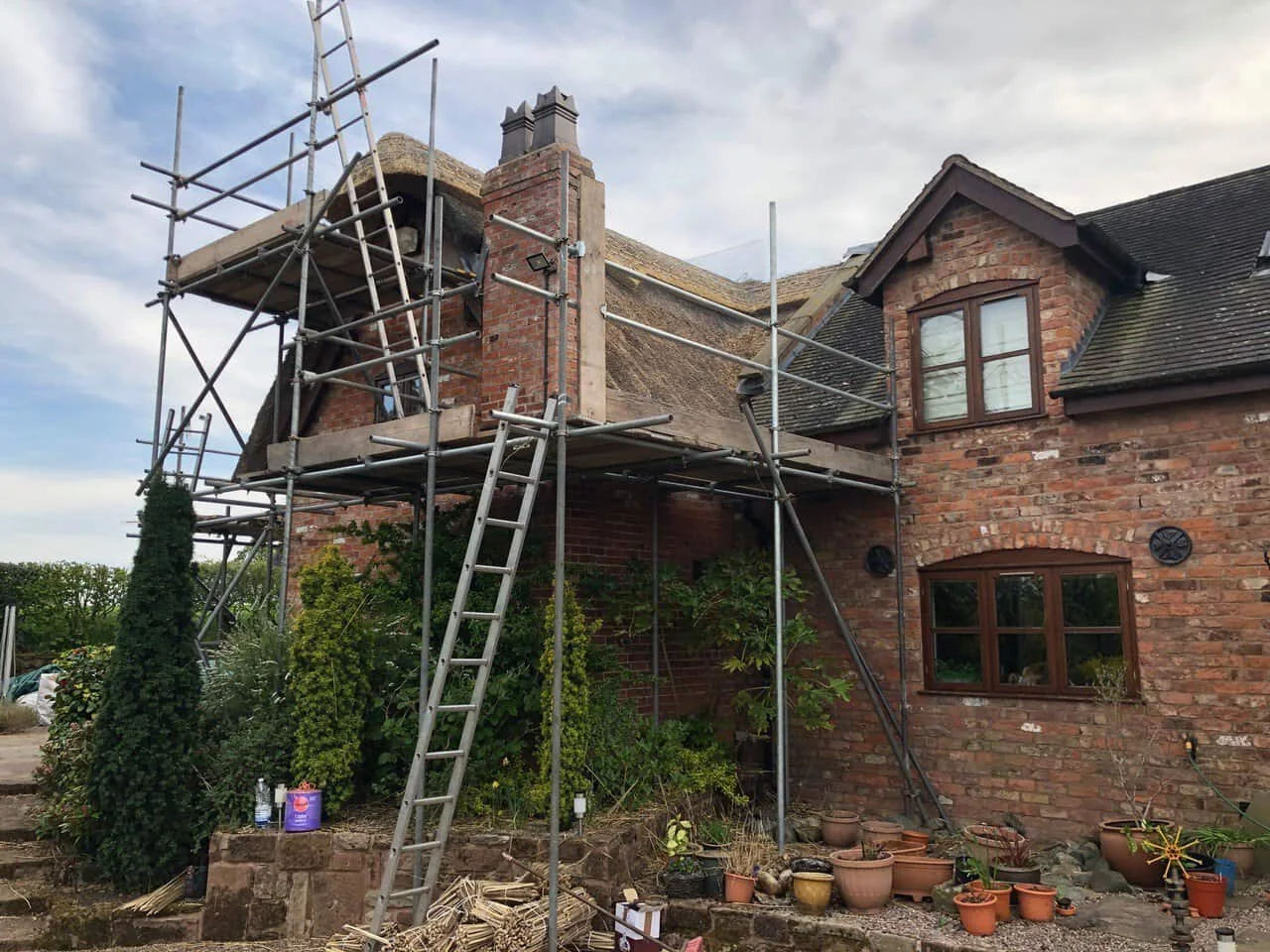
Start with the roofline
A cracked joint or loose-looking pot is only one part of a chimney concern. The stack is exposed above the roofline, connected to flashing and coverings, and may serve a live or redundant flue. The useful first step is to understand the safe, visible evidence in its wider setting.
We look at the masonry that remains, how the upper stack and roofline meet, any change you have noticed and the access needed for a more informed assessment. That helps distinguish a local masonry repair from a concern that needs a different or broader first response.
Discuss a chimney concern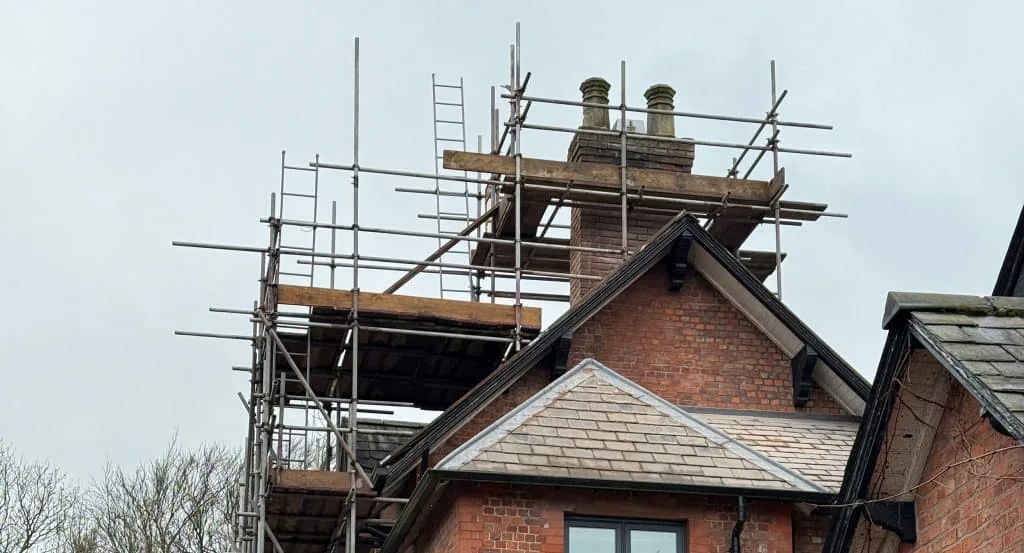
A scope around the stack
The appropriate route follows the condition of the chimney, the adjacent roof details and the construction already in place. It is not decided by one visible joint or one photograph alone.
Where deterioration is local and the surrounding stack is sound, the agreed work may focus on specific brickwork, failed joints or a weathered upper detail rather than removing material that is still performing well.
Where the condition of a section warrants it, an agreed rebuild can be planned around the retained fabric, brick size, bond, mortar and the way the renewed work will meet the roofline and flues.
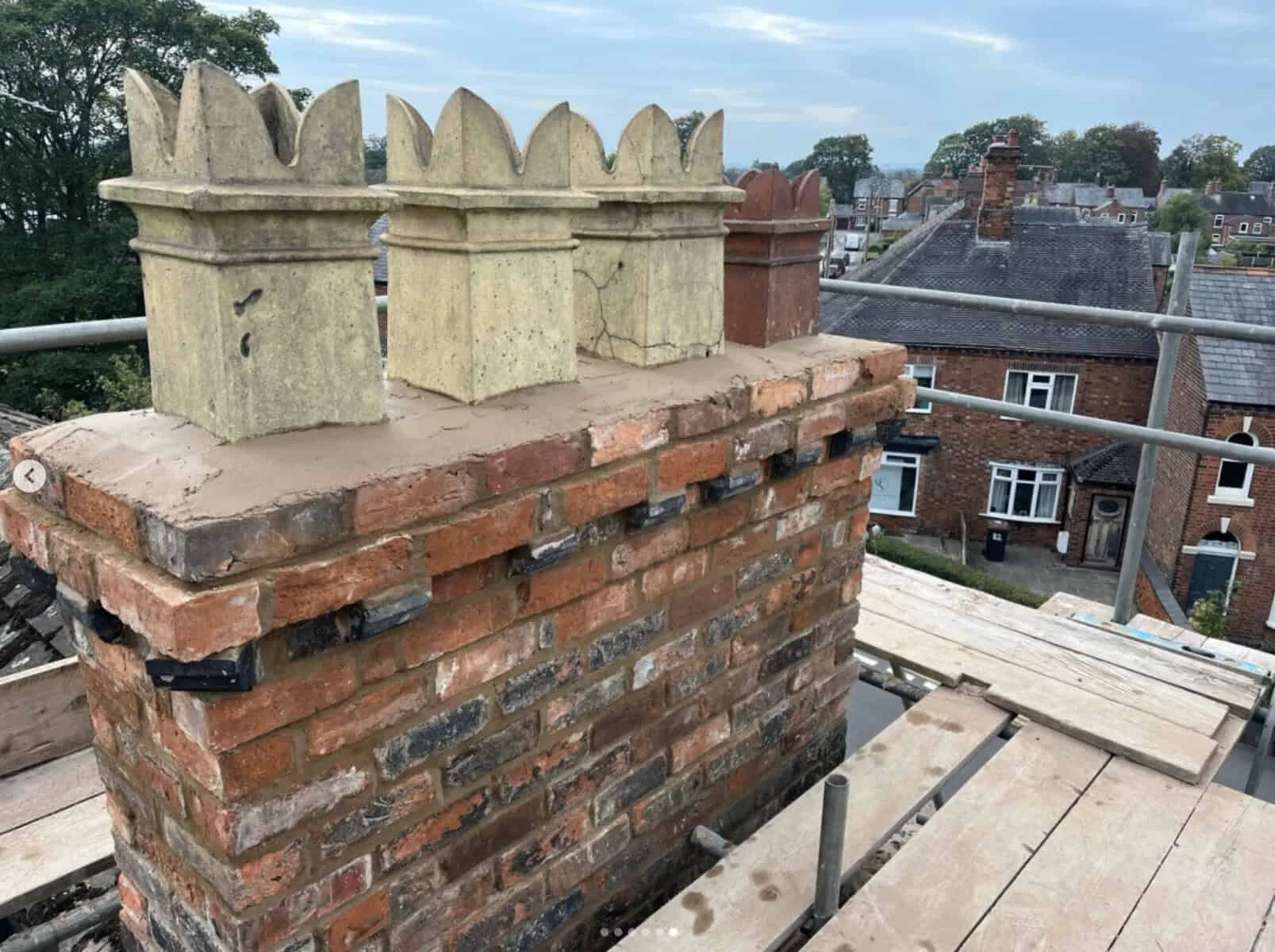
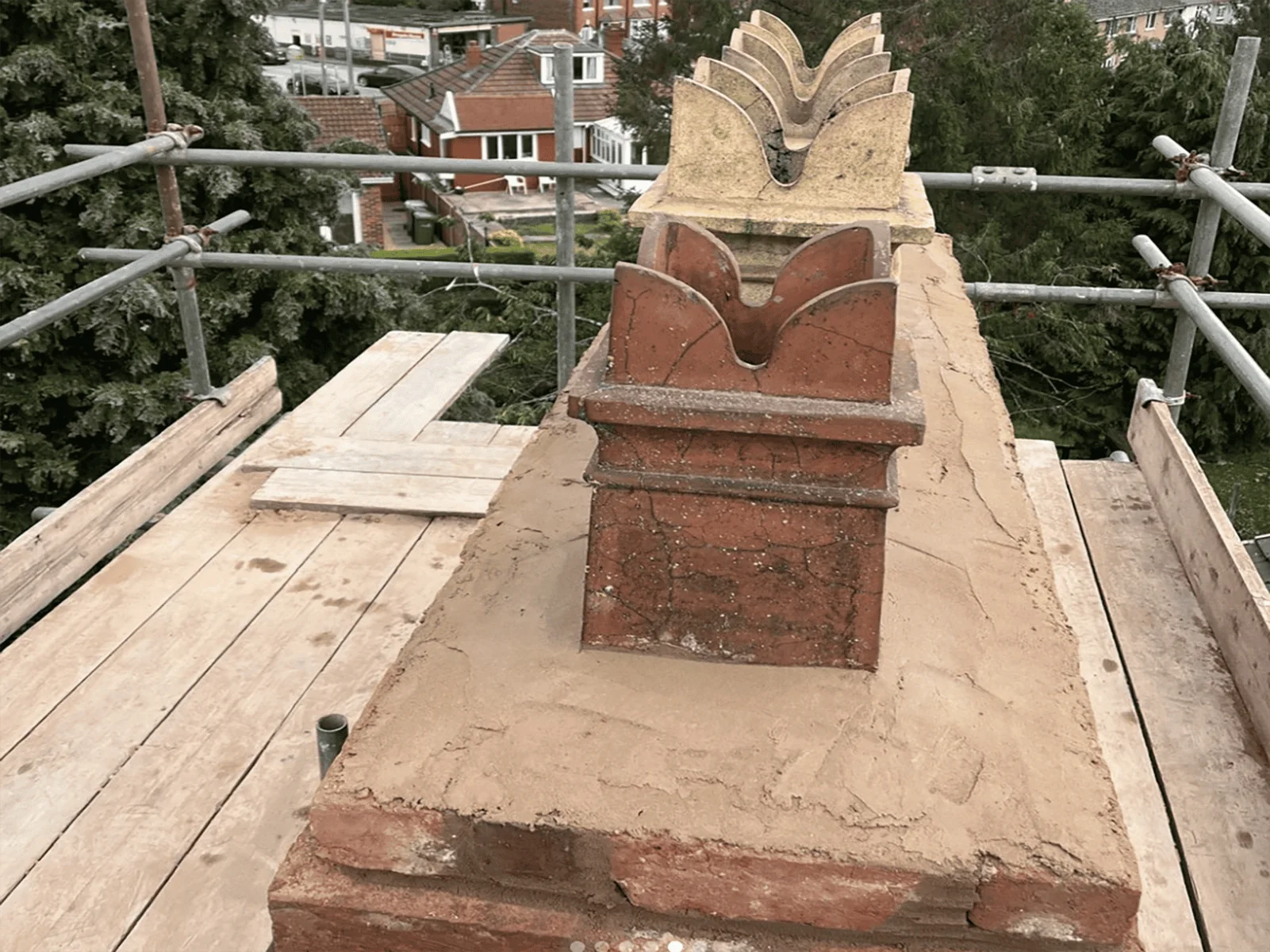
The mortar around pots and across the top of a stack needs to support the visible detail and direct water away. Its condition is considered with the pot security, brickwork and the flue context, not in isolation.
A chimney concern can involve flashings, roof coverings, ventilation or a flue that is still in use. Those points should be identified early so the masonry scope is not expected to solve an issue beyond its role.
Look at the top detail closely
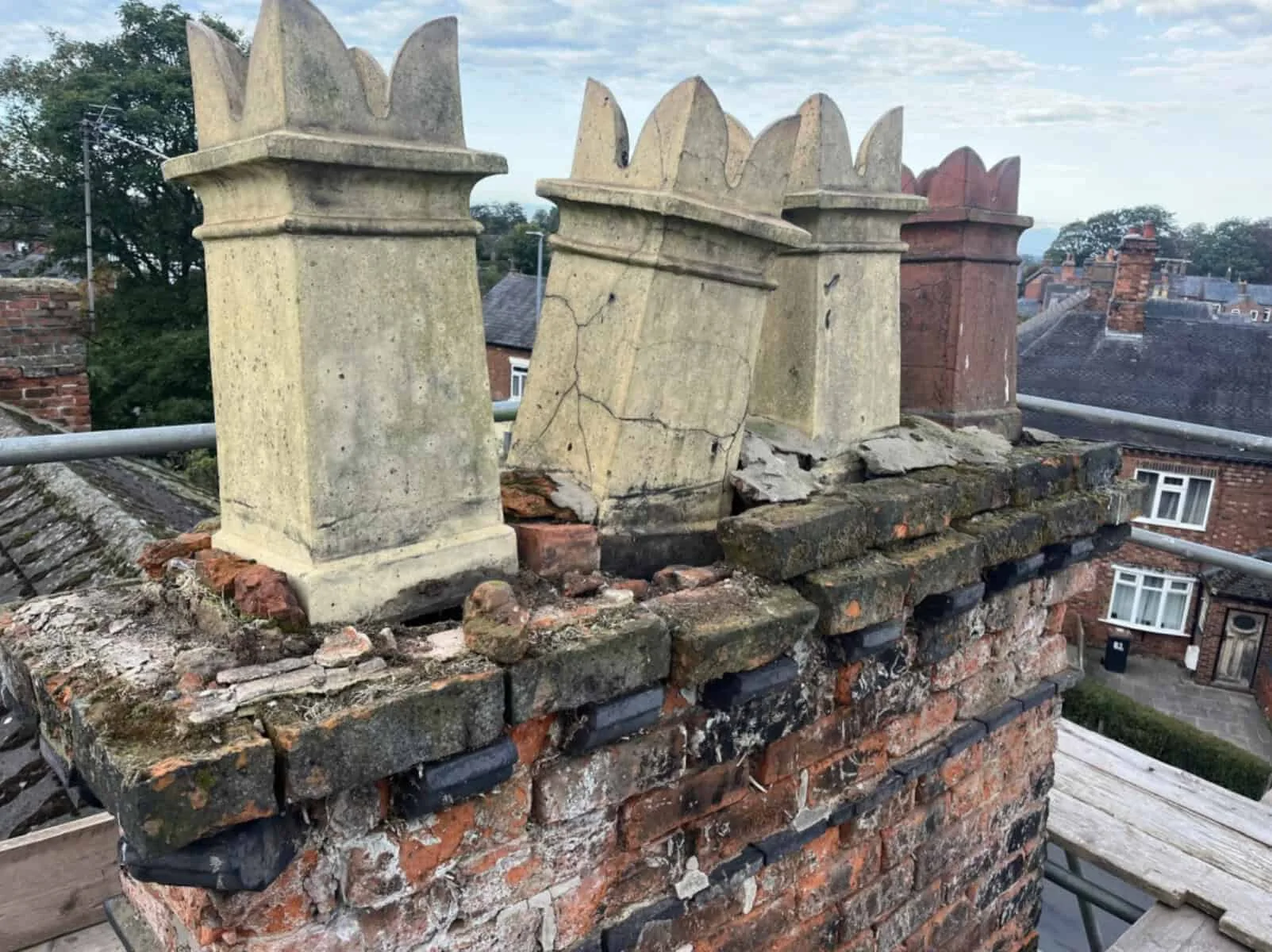
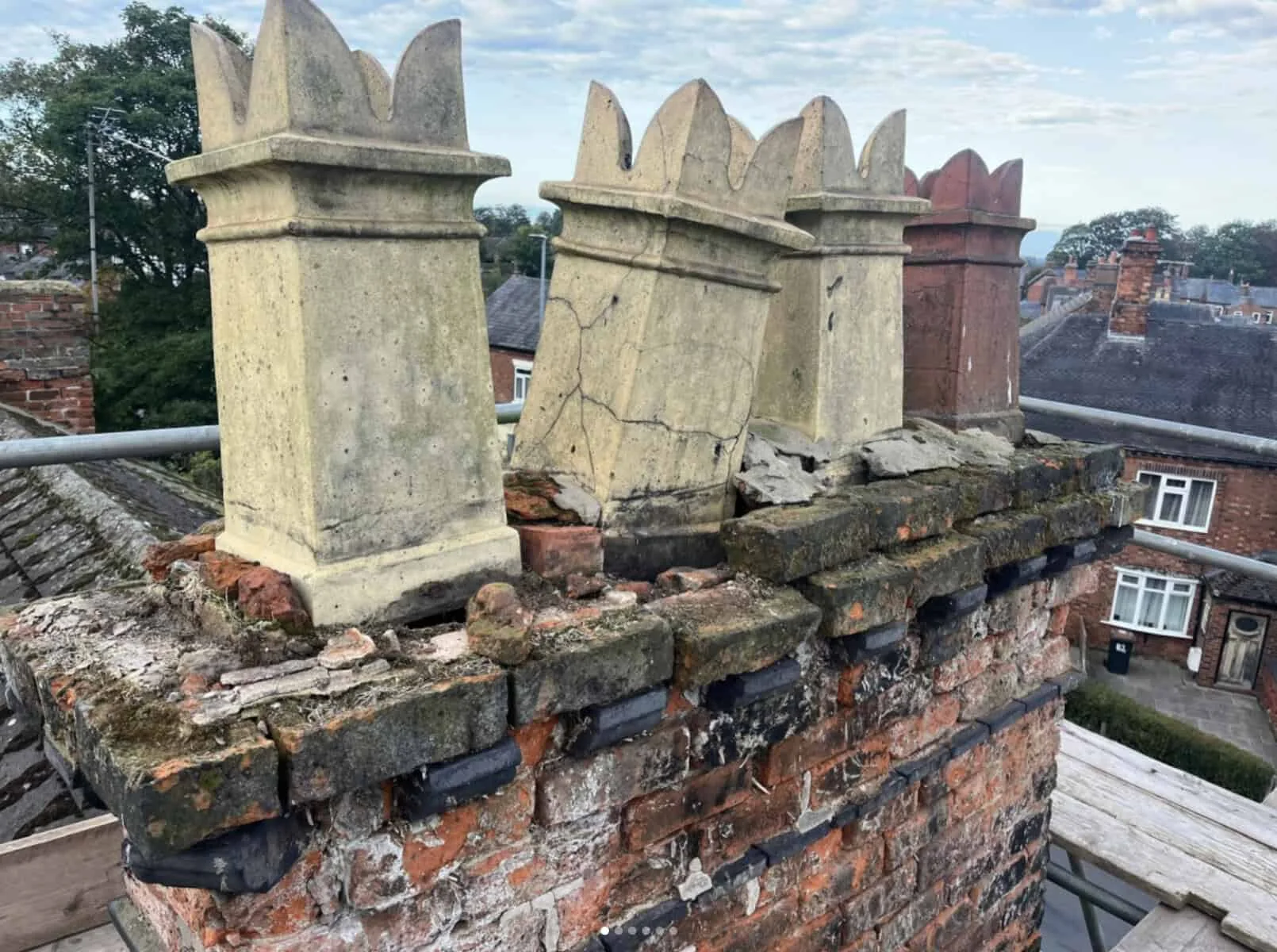
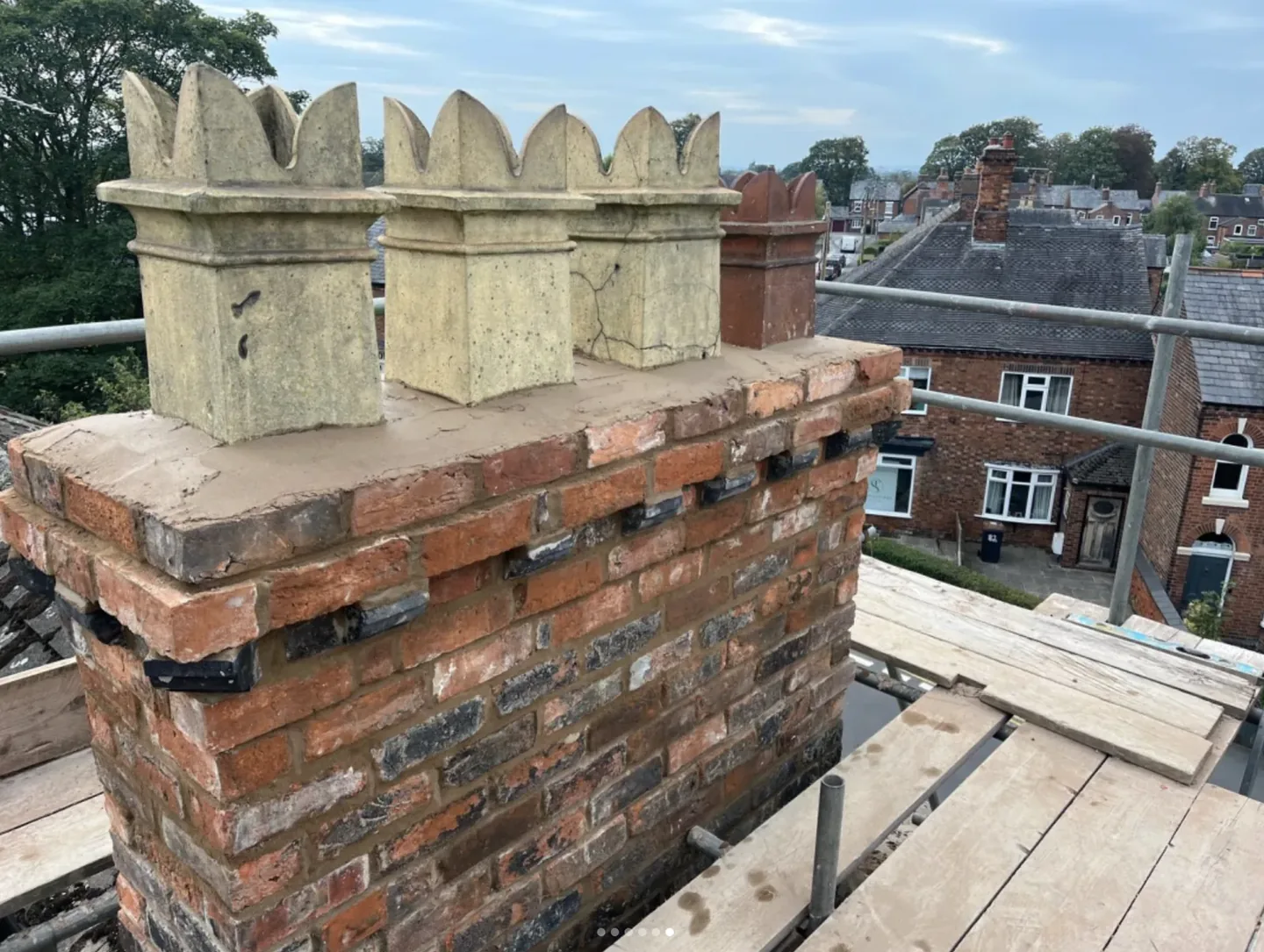
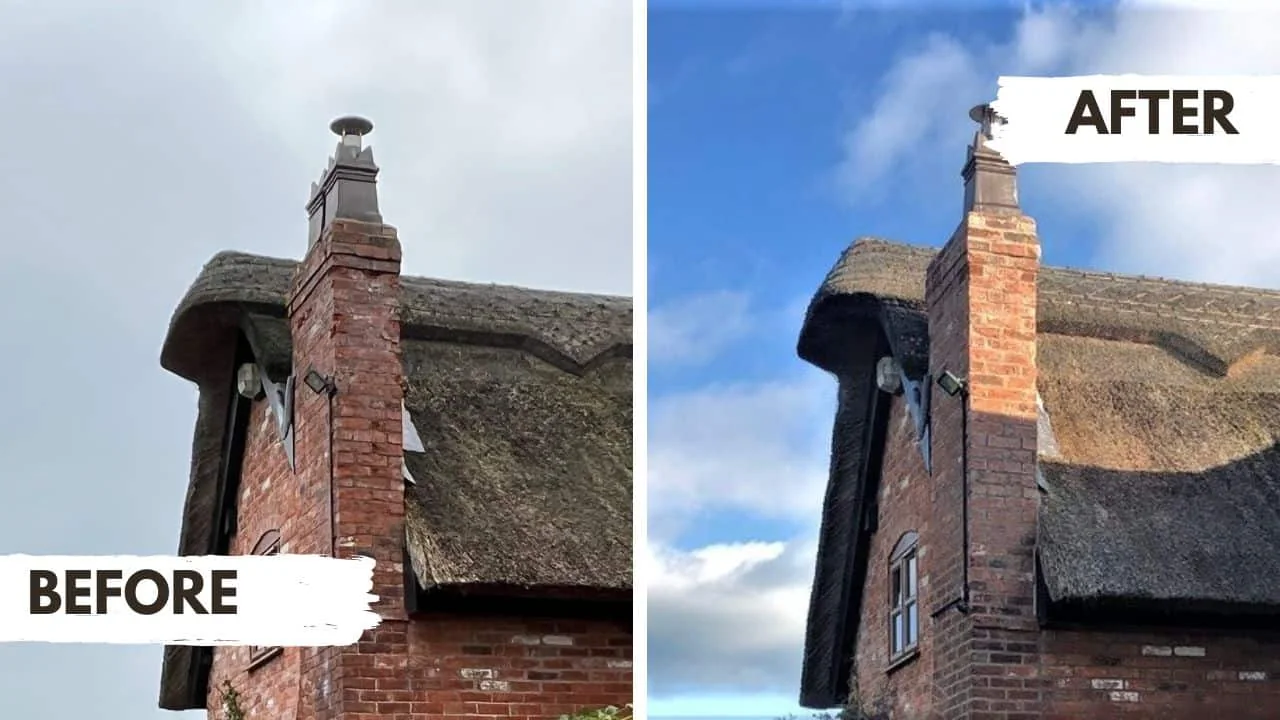
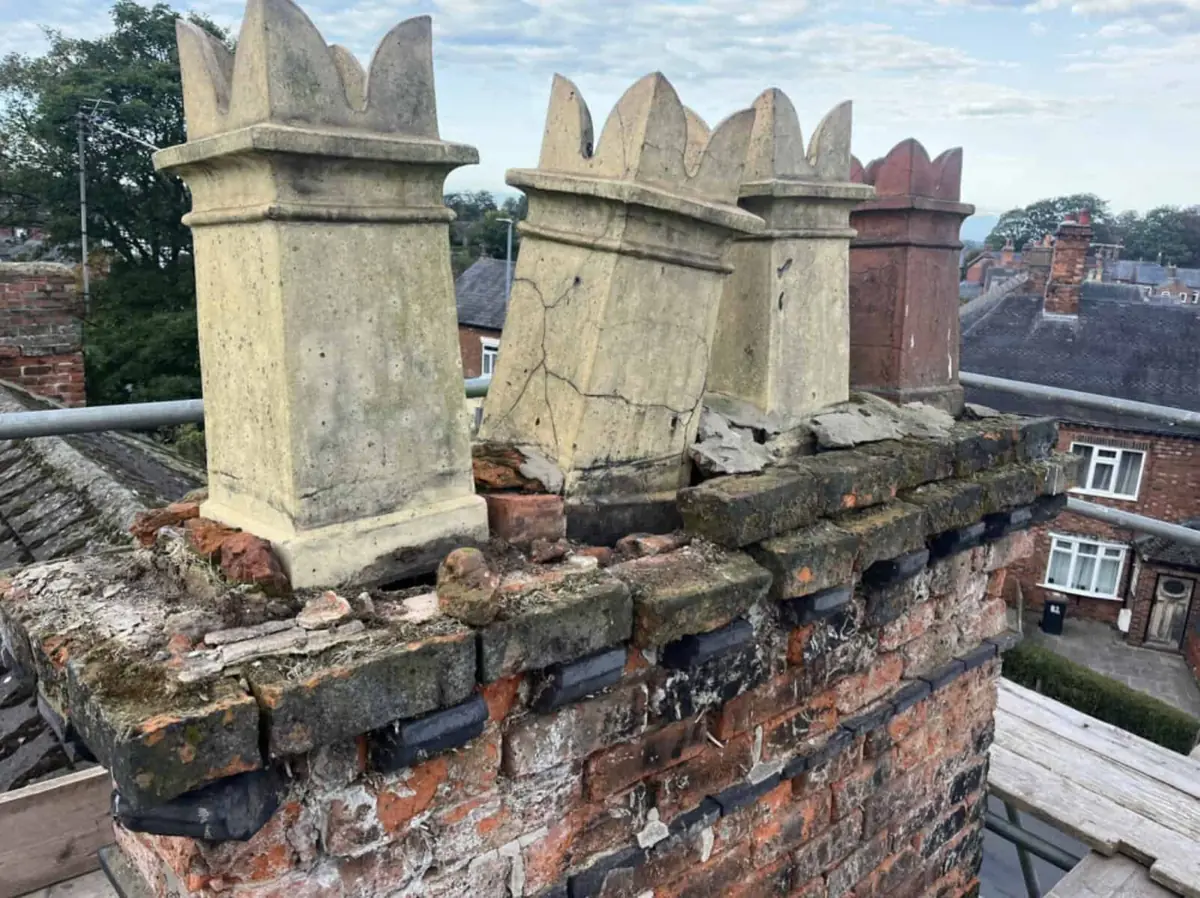
Drag the control to compare supplied project views before and after upper-stack work. It illustrates a particular repair stage, not a promise that every pot, top course or chimney concern needs the same work.
A considered sequence
A clear sequence helps keep the access, condition, repair material and roofline context connected — rather than treating a chimney as a stand-alone patch of brickwork.
A clear view of the property, roof slope, stack position and any interior staining or change you have noticed gives the first conversation useful context. We never expect a homeowner to climb up for closer photographs.
The condition of exposed brickwork, upper courses, pot beds and roof junctions can only be properly discussed once appropriate access and the visible scope have been considered.
The agreed route distinguishes between local repair, more extensive brickwork work, upper-stack renewal and any detail that needs another specialist view, survey or approval before the masonry work is planned.
The final stages bring the selected brickwork, mortar and top-of-stack details together. The visible work is reviewed alongside the related roofline and maintenance points already identified during the assessment.
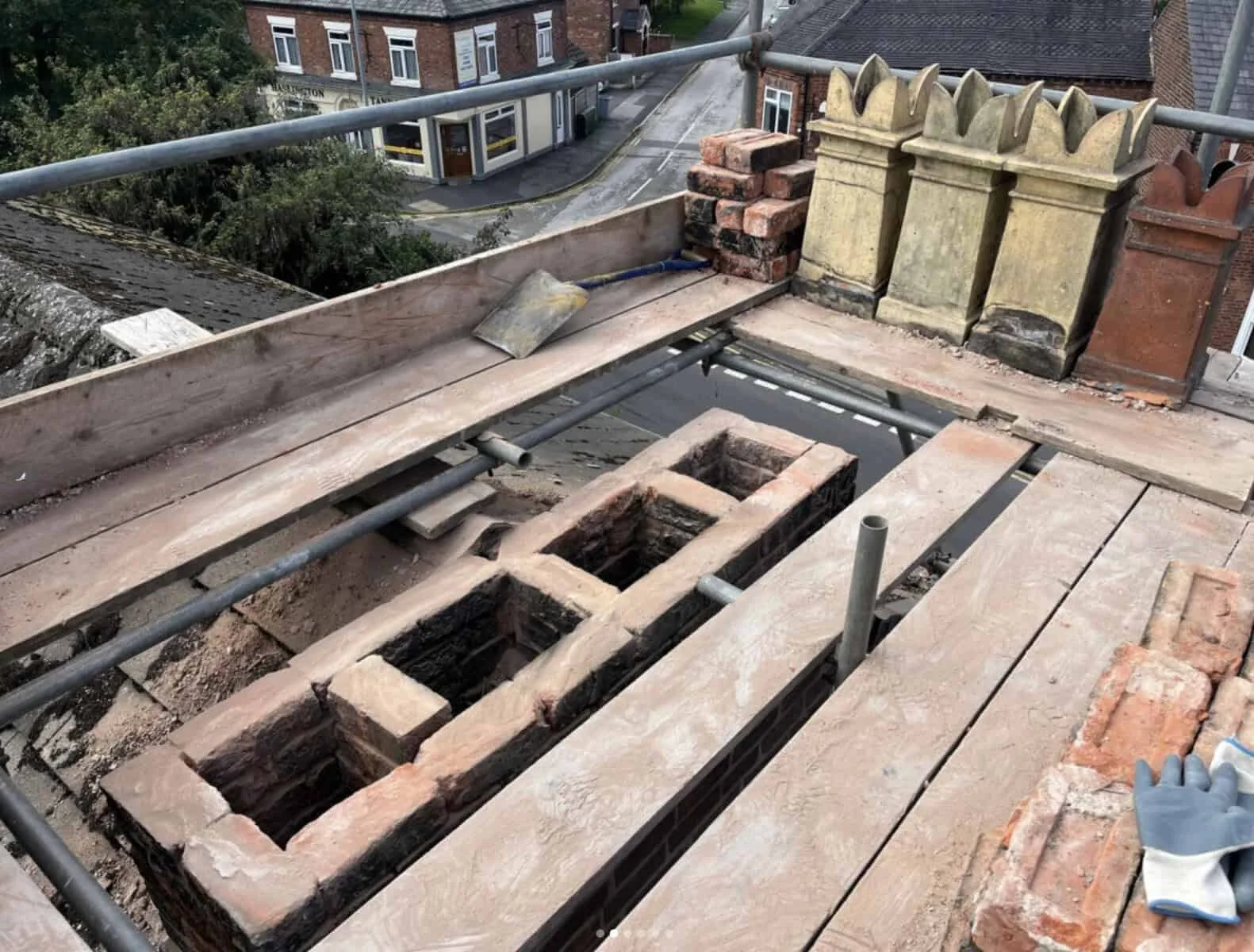
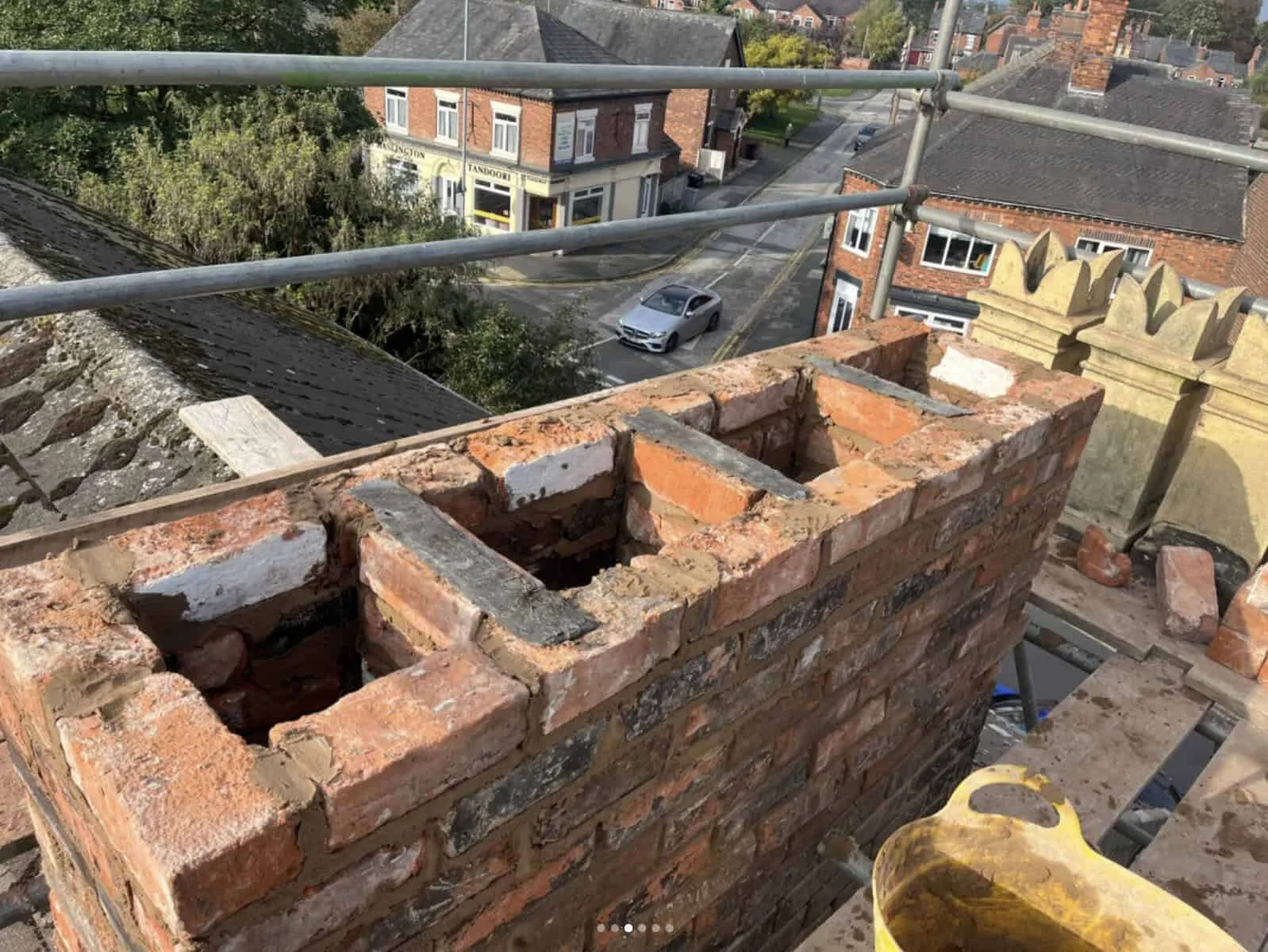
Project sequence, viewed carefully
These supplied project views show a chimney repair sequence from different positions on the scaffold. Use the control to explore the change, while recognising it is a visual project record rather than an exact like-for-like measurement of every detail.
Signs to take seriously
These observations help distinguish a routine masonry enquiry from a condition that may require another form of advice or urgent response. Do not climb onto a roof or scaffold to investigate the stack yourself.
Chimney work in context
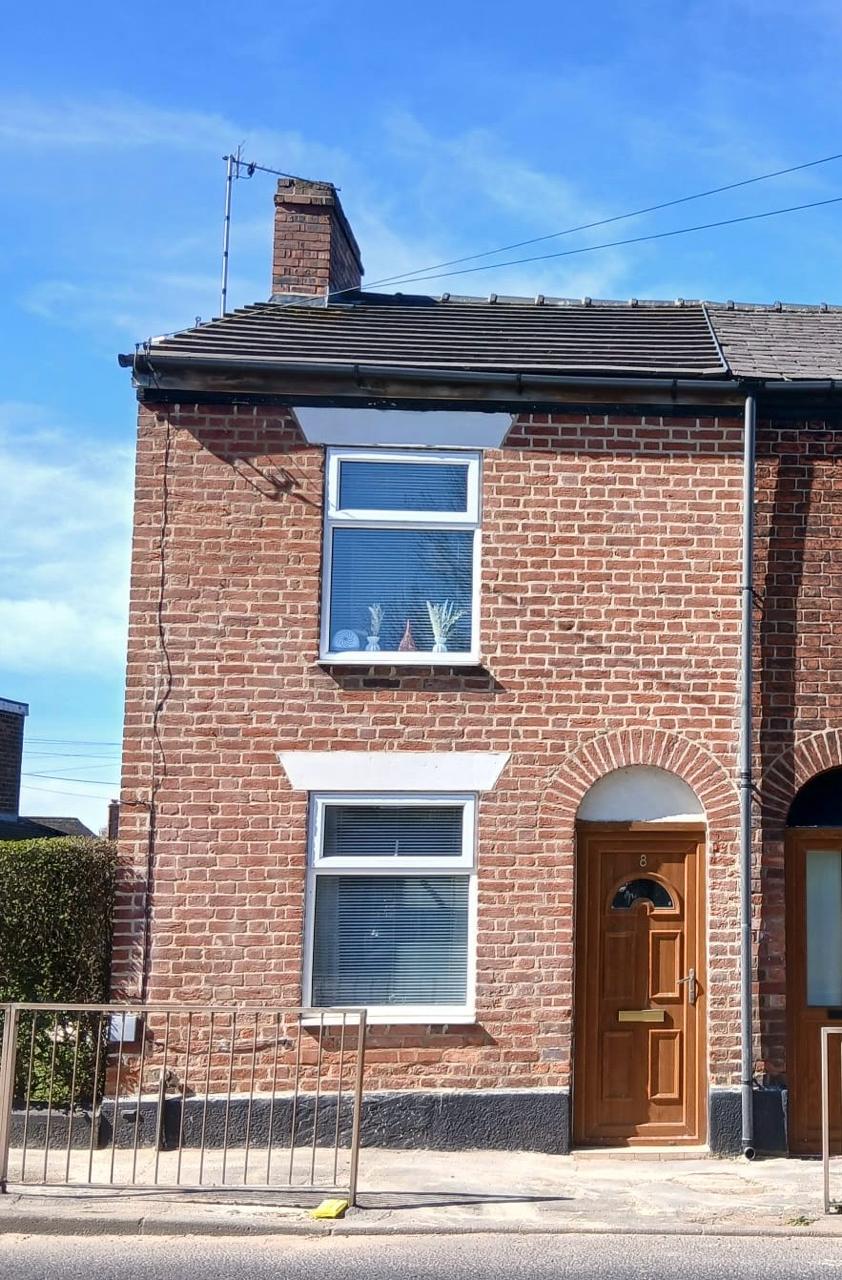
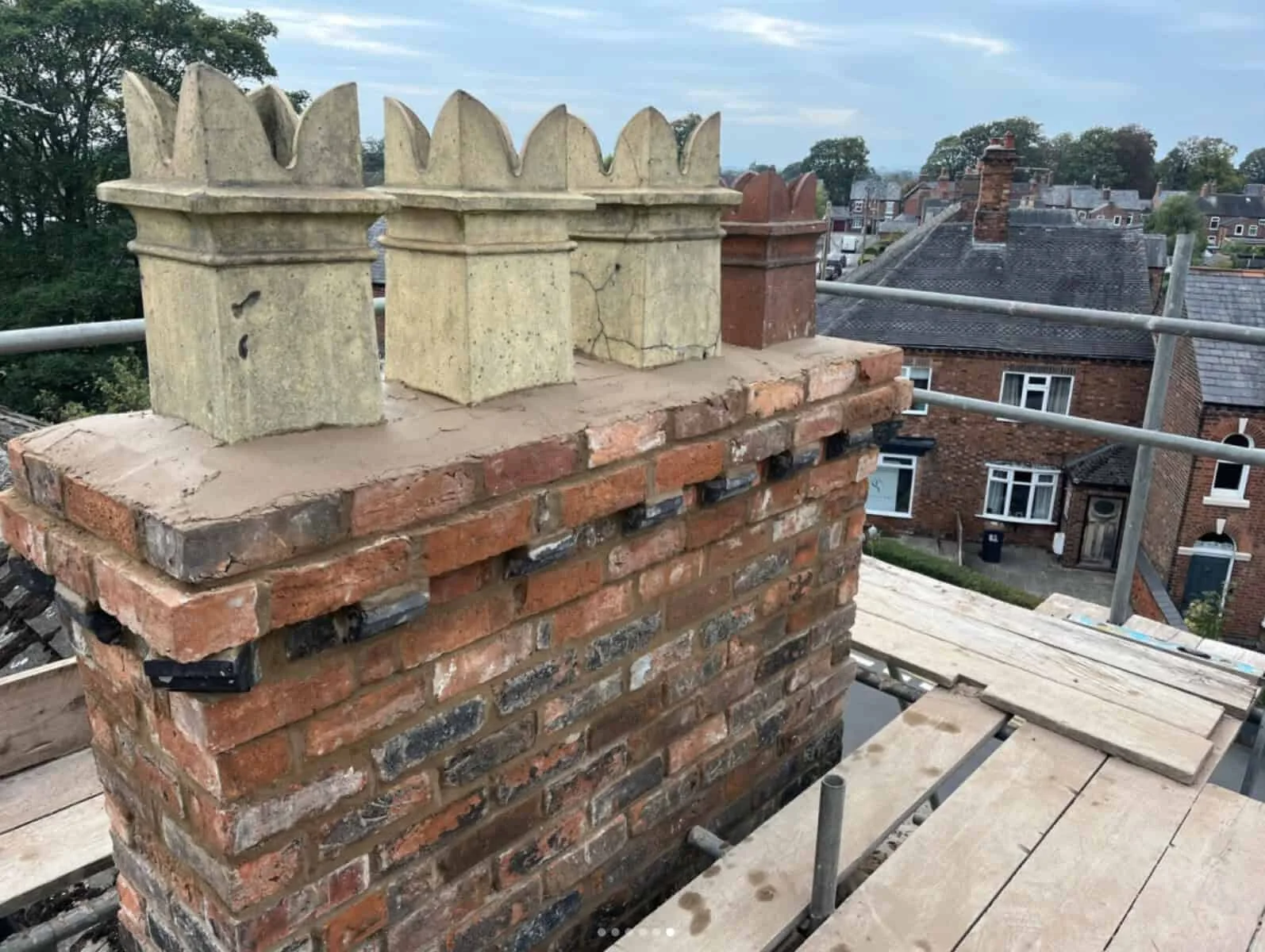
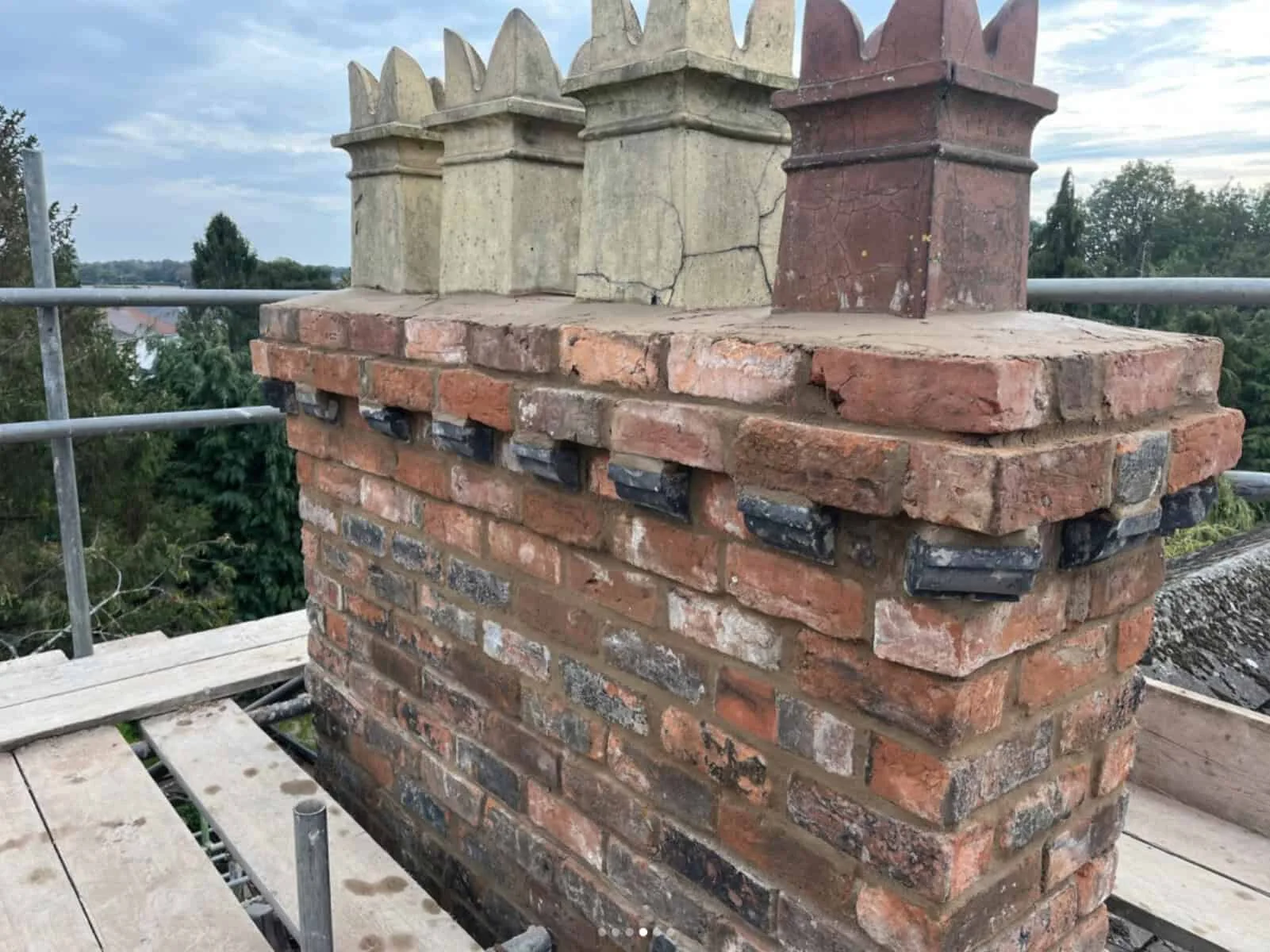
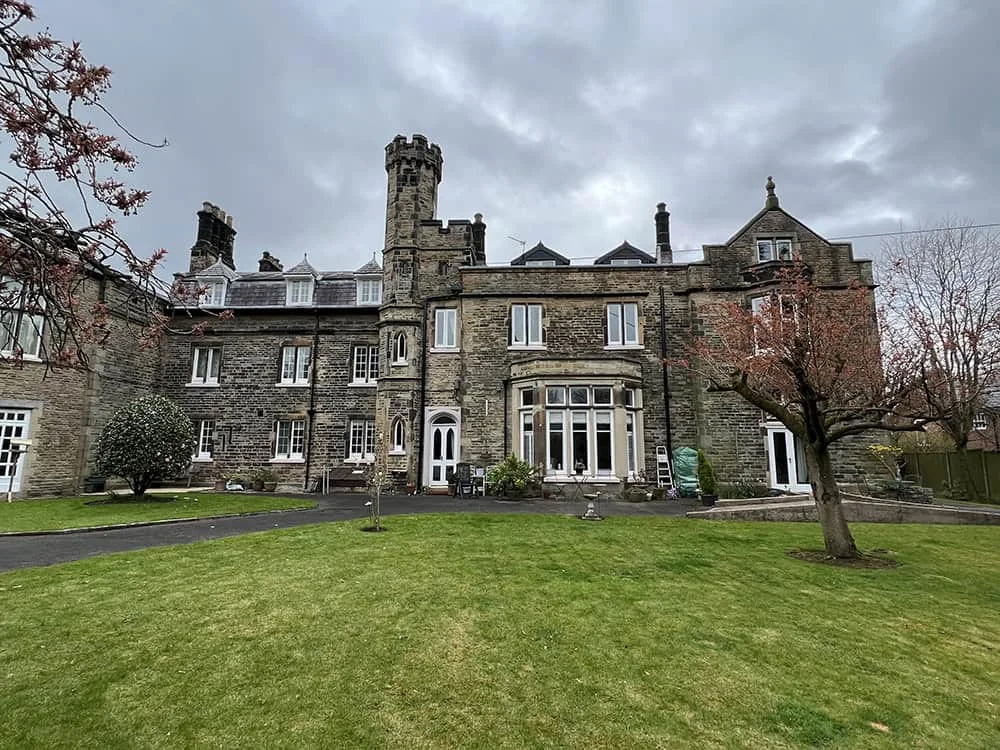
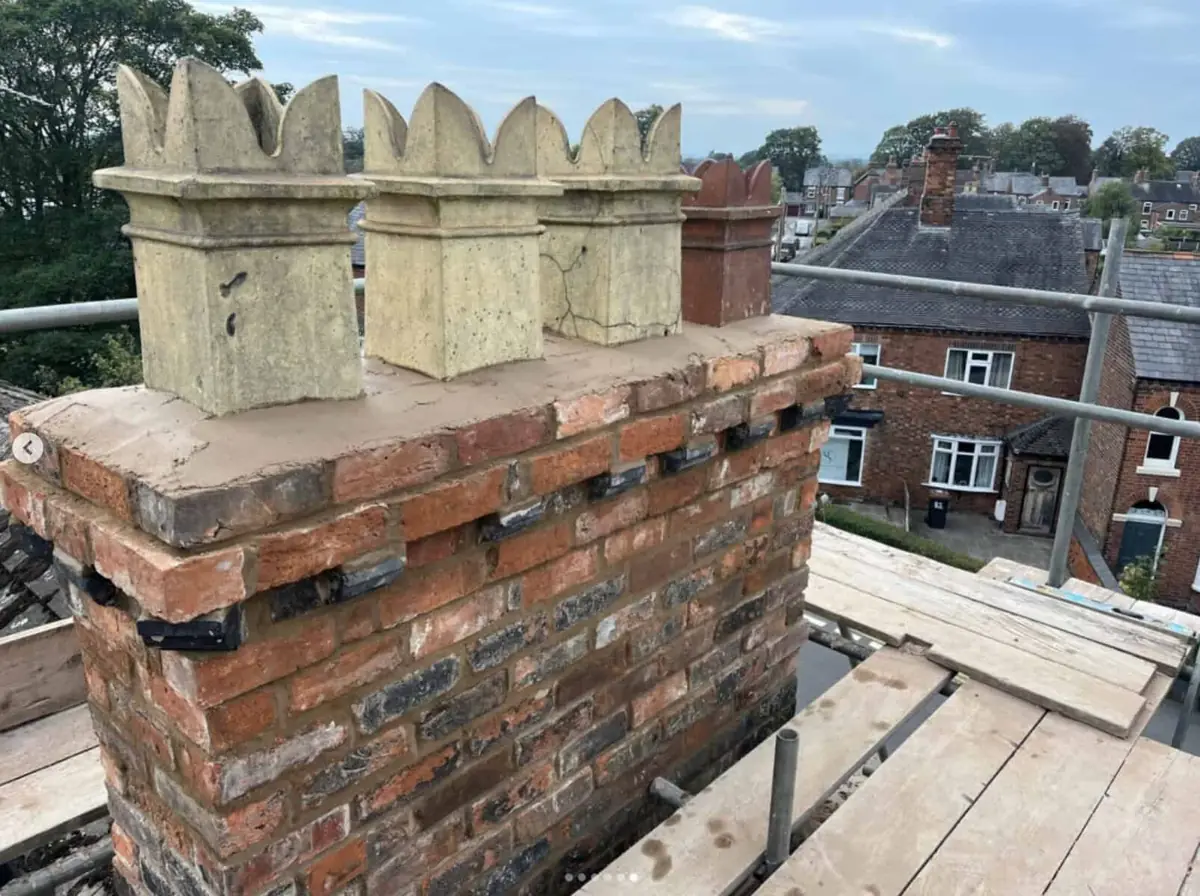
These images illustrate condition, high-level masonry stages and different property contexts. They are not treated as interchangeable diagnoses or as evidence that another chimney needs the same repair.
Plan your enquiry
Share what you can see safely, what has changed and the wider property context. It helps establish whether a masonry repair visit is appropriate and what needs to be considered before a scope is agreed.
Our projects
Take a look at some of the work we have completed, from the repair work and materials used through to the finished result.
Helpful reading
Explore the relevant detailed guides below. They support, rather than replace, an assessment of the individual building.
For the wider picture, start with the homeowner’s repointing overview covering condition, materials, safe access and repair planning.
Chimney repair planning guide10 minute read
Chimney maintenance guide9 minute read
FAQs
Every property has its own material, condition and access considerations. These answers explain the points we would normally discuss before a scope is agreed.
Visible damage can help start the conversation, but it does not confirm the right scope from ground level. A local repair may be appropriate where the surrounding stack is sound. Widespread breakdown, unstable material, displacement or a more significant defect may need a different approach and, where relevant, further structural advice.
Possibly. A repair can focus on an upper section, pot bed, shoulders or local brickwork when the condition supports that approach. The masonry below, the way the repair meets the roofline and the condition of related details still need to be assessed before a limited scope is agreed.
Haunching is the shaped mortar detail around chimney pots and across the top of the stack. It helps form a weather-shedding finish while supporting the visible top detail. Cracks, gaps or loose material should be considered with the pot condition, upper brickwork and flue context.
No. Chimney-related moisture can involve masonry, mortar, flaunching, roof junctions, flashings, coverings, gutters, condensation or an open or poorly ventilated flue. A careful repair conversation looks at the possible water route rather than assuming the visible pointing is the single cause.
In some circumstances a change to the stack may be considered, but it needs to follow the construction, any shared or party-wall implications, roof make-good, ventilation requirements and the status of connected appliances. Structural, building-control, heritage or other specialist advice may be needed before a scope is defined.
Older stacks often need a material-led approach. The existing brick or stone, mortar, joint profile, pots, decorative details and listed-building context should be considered before work is planned. Consent or advice may be required for alterations to heritage fabric.
The safe condition and operation of an appliance and flue should be confirmed separately by an appropriately qualified professional. Tell us if the flue is in use so it can be considered in the repair discussion, and do not use a chimney where its safety is uncertain.
Access depends on the height, roof form, property setting, condition of the stack and the work that may be required. A safe access approach is part of the planning conversation, not an assumption made from a close-up photograph alone.
The aim is to select materials and a finish that sit appropriately with the surrounding stack. Brick size, texture, colour range, mortar and weathering all matter. Availability and the condition of the remaining masonry guide what is practical for the individual property.
A wide, safe ground-level view of the property and chimney position is a good start. Include any visible damage, interior staining, roofline concern, flue use, survey notes, heritage context, access constraints and change you have noticed. This helps establish the right first step without asking you to inspect at height.
Call 01625 920 888, or for the fastest way to get a quotation, click Get a quotation and fill in your details.