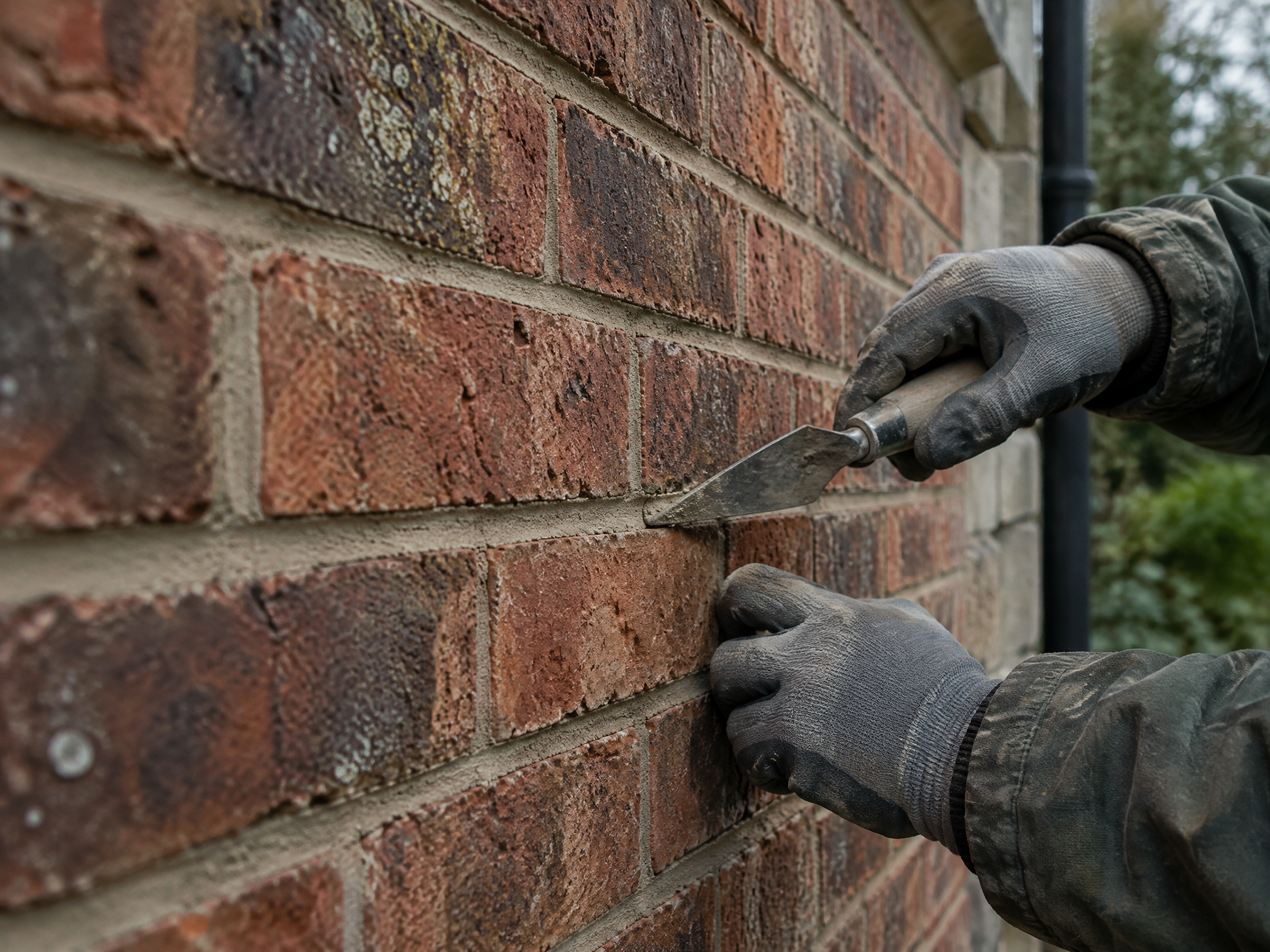
Brick repointing

Brick repointing in Staffordshire

A careful, property-led route for mortar joints that have weathered, cracked or loosened — without treating sound masonry as a cosmetic problem.

A clear starting point

What does brick repointing involve?

Brick repointing renews mortar joints that have weathered, cracked or loosened, while retaining sound material wherever suitable. An assessment considers the brick faces, existing mortar, joint profile, exposure, rainwater details and access before agreeing the repair scope. Failed mortar is carefully removed, compatible mortar is applied, and fresh work is protected as needed. Repointing is not a substitute for investigating other causes of damp or related defects.

Repointing with a reason

Renew failing mortar with the wall, not just the joint line, in mind.

Brick repointing means replacing mortar where it has genuinely failed. It can help refresh an elevation, but its first purpose is to support the way the brickwork manages weather. That calls for a close look at the masonry before a finish is chosen.

We consider the depth and condition of the existing joints, the brick faces, nearby rainwater details, previous repairs and the wider setting. It helps keep the scope focused on what needs attention, while retaining sound material that still belongs to the wall.

Discuss brick repointing
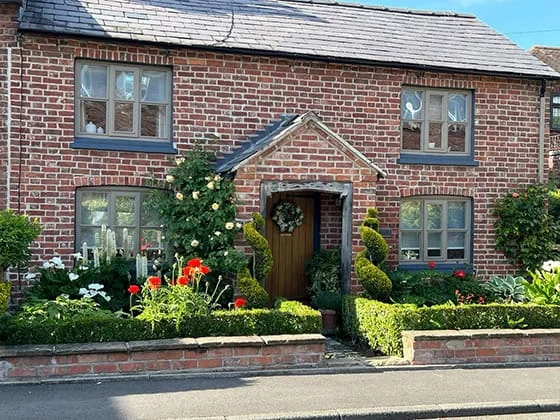
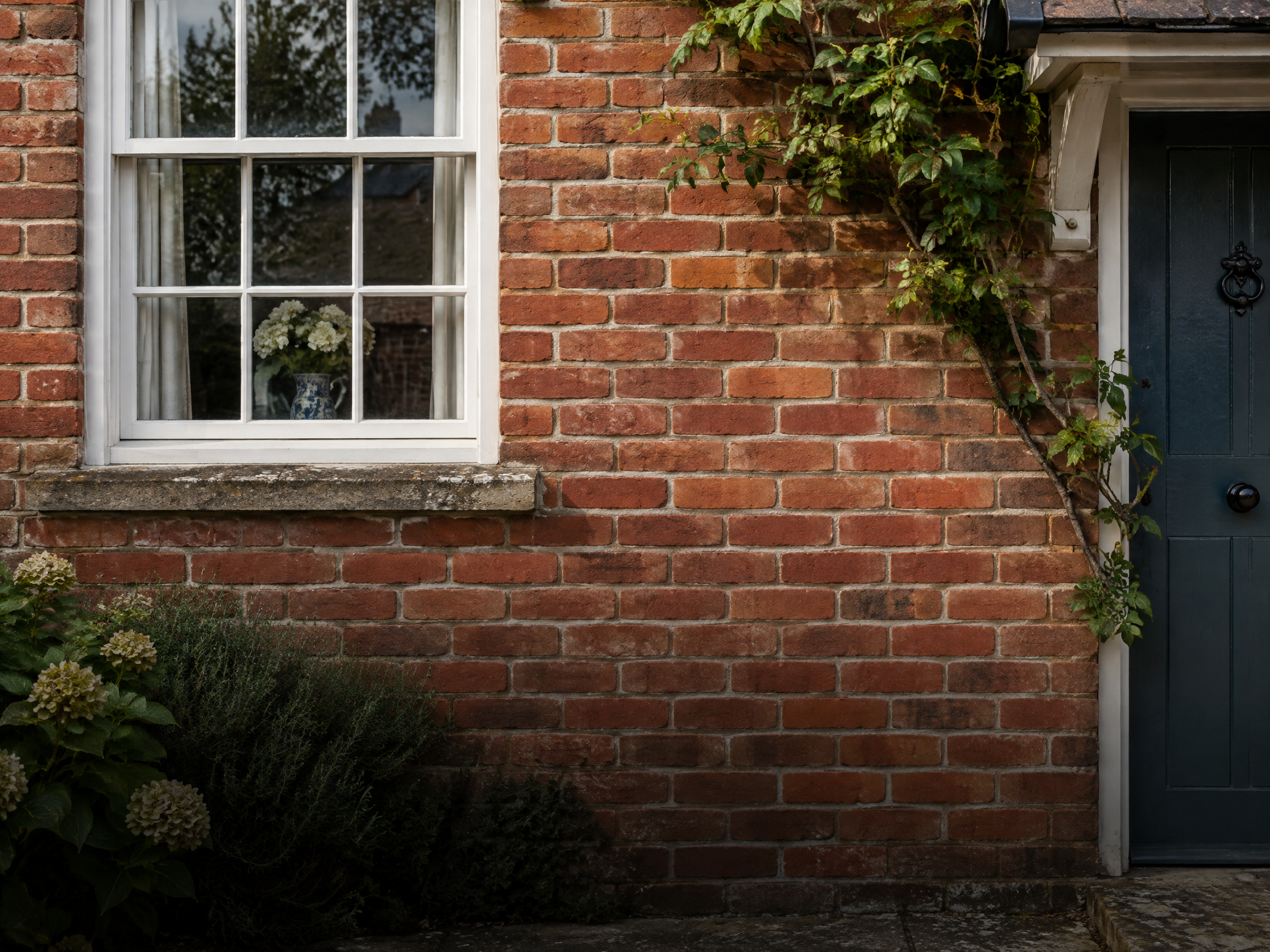
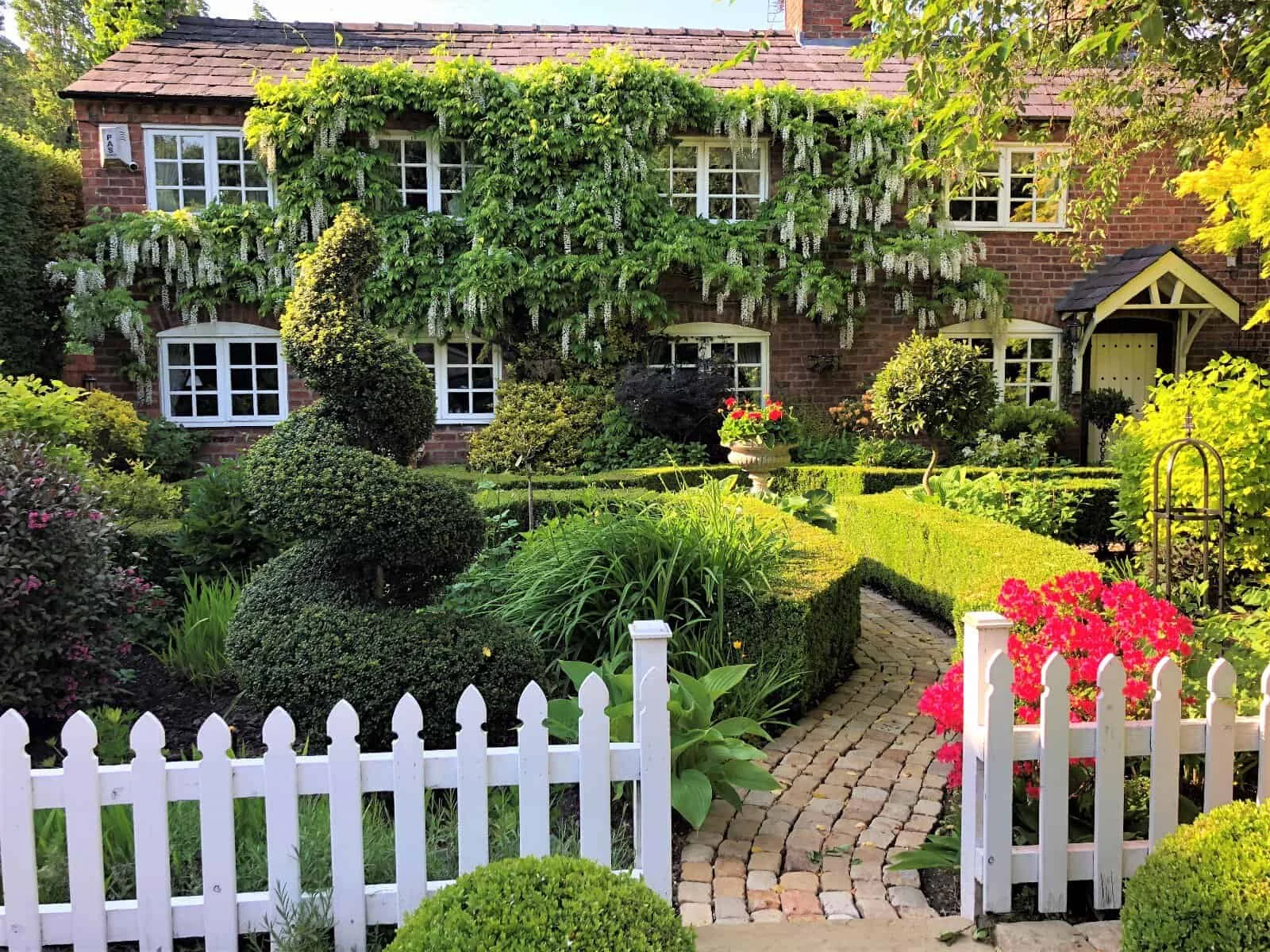
Garden-facing traditional red-brick home with mature planting, window details and visible masonry joints
Brickwork, openings, rainwater details and surrounding features are assessed together before a repointing scope is agreed.

What we assess first

Four questions that make a repointing discussion more useful.

Mortar deterioration is often only one part of the story. A clear assessment looks for why the joints have changed and whether any other repair should be dealt with before new mortar is introduced.

01

Start with the depth and condition of the joint

Repointing is considered where mortar has weathered back, cracked, loosened or no longer protects the brick edges as intended. A wall does not need a full renewal simply because its joints have softened with age.

02

Look for water routes and linked defects

Overflowing gutters, faulty flashings, ground levels, cracked bricks and earlier hard repairs can all affect an elevation. Those details help separate a pointing need from another masonry or rainwater issue.

03

Match the repair to the brickwork

The existing mortar, brick type, joint profile and exposure guide a compatible material and finish. A small sample area can be useful where the appearance of a traditional wall matters as much as its protection.

04

Plan the elevation, not just the visible gap

Localised repair may be the right answer in one place, while a priority elevation needs a broader scope. Access, adjoining surfaces and the condition of the surrounding brickwork are part of that decision.

Look at the joint finish

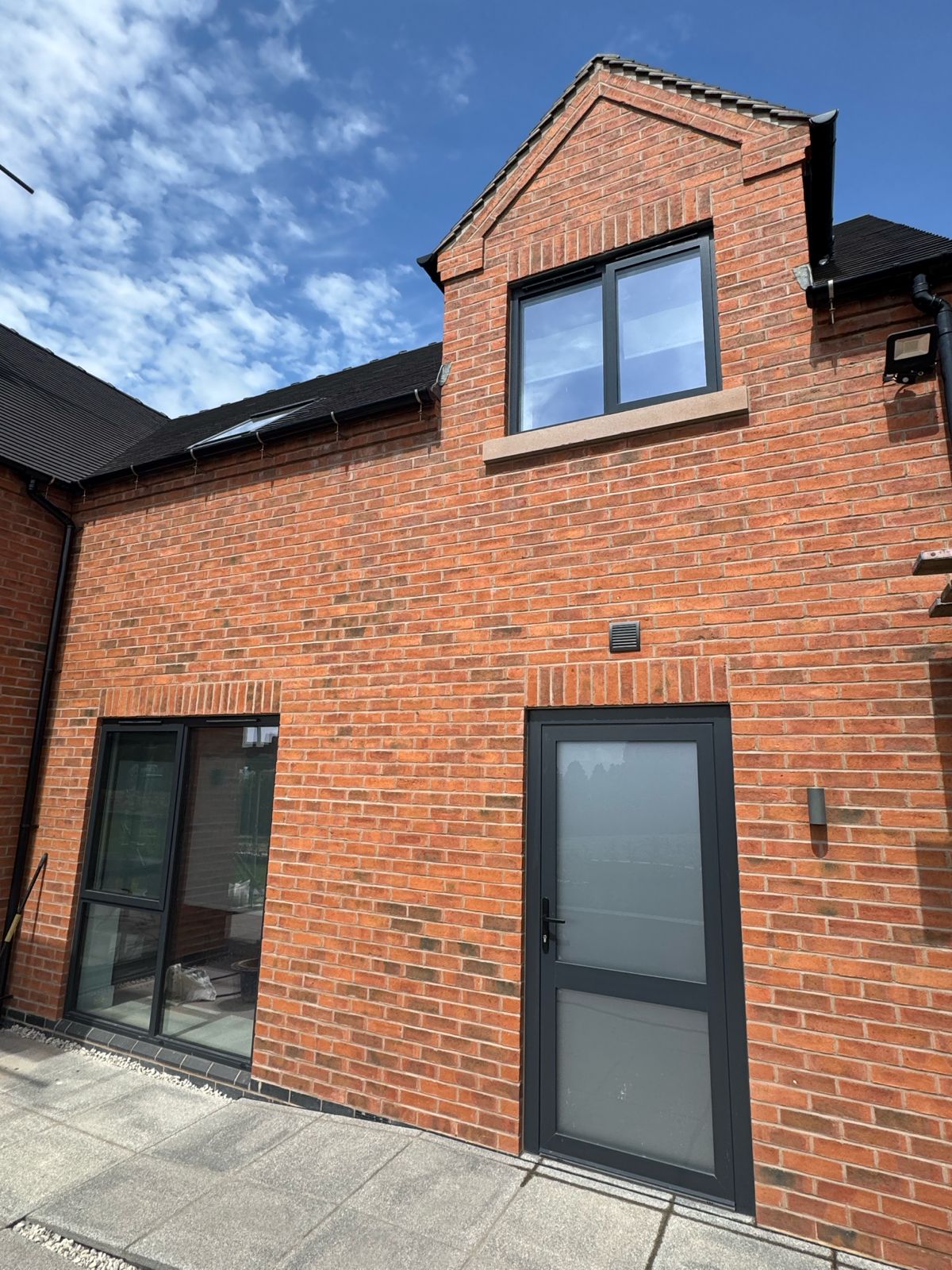
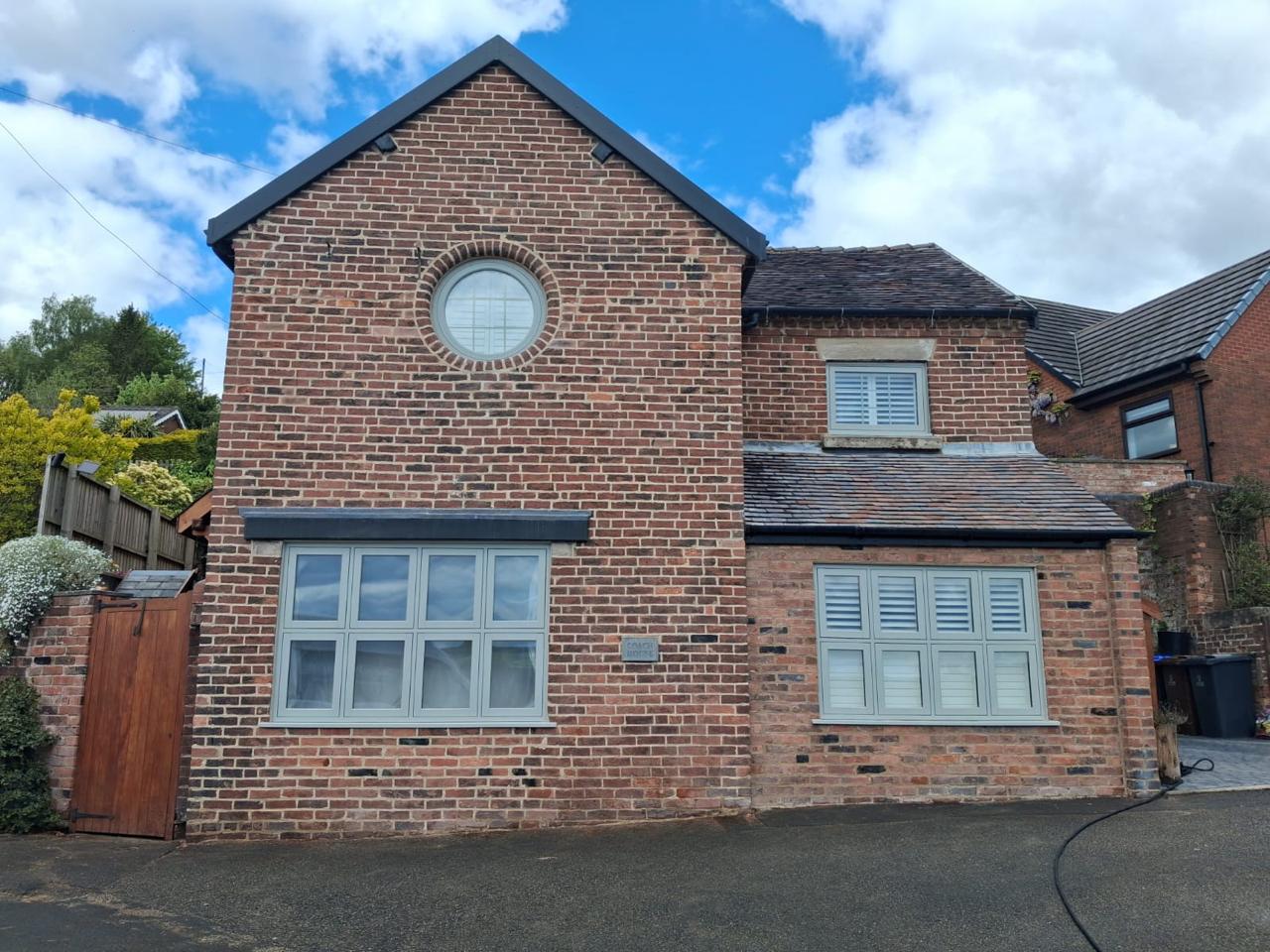
Compare the visible difference a considered repointing programme can make.

Use either slider to explore the change in the brickwork. These are illustrative examples only: mortar, joint profile, preparation and the appropriate scope should always be chosen around the property in front of us.

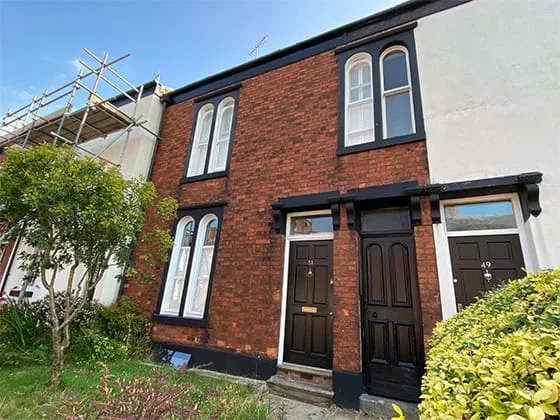
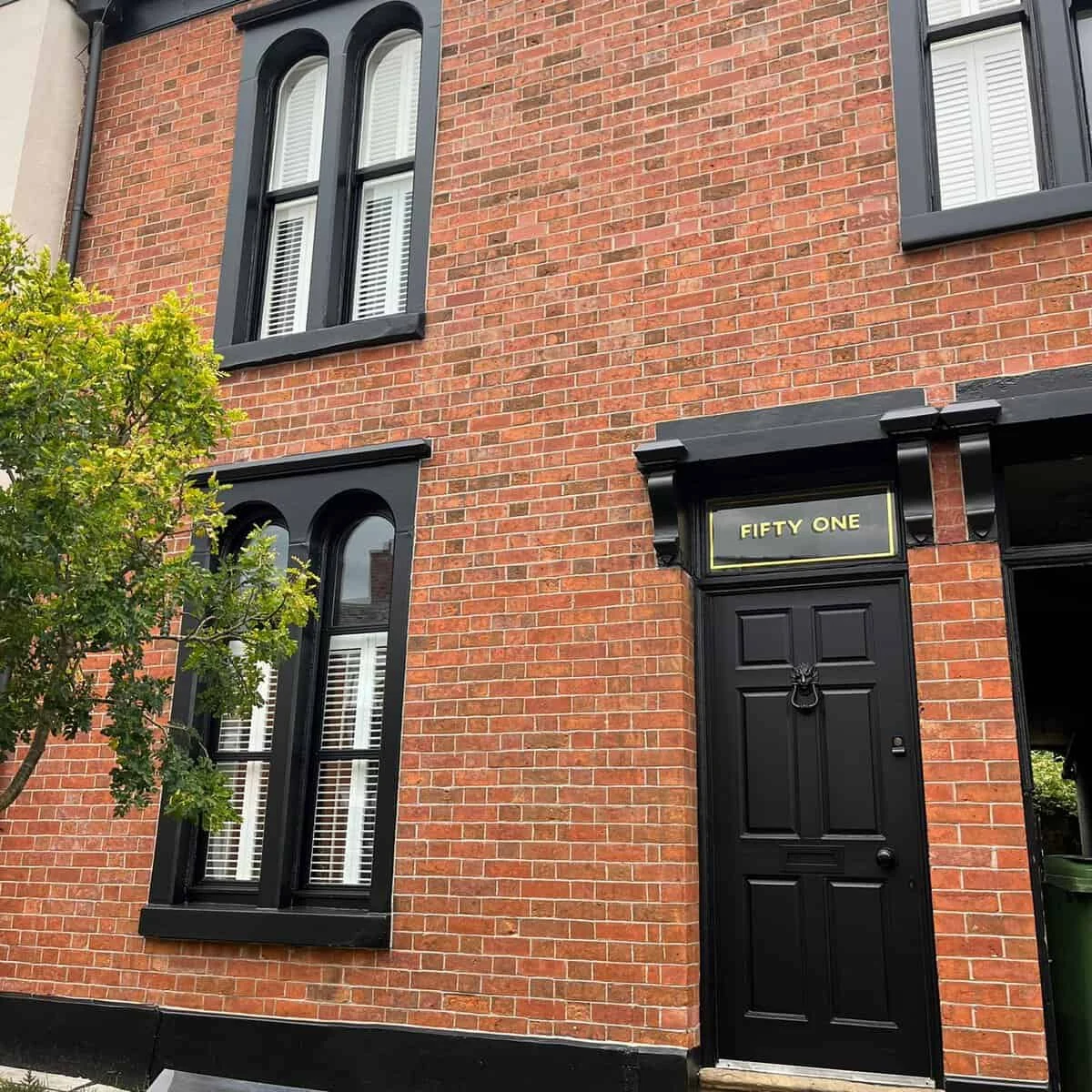
Red-brick terraced home after repointing, with crisp mortar lines around black-painted windows and doorway
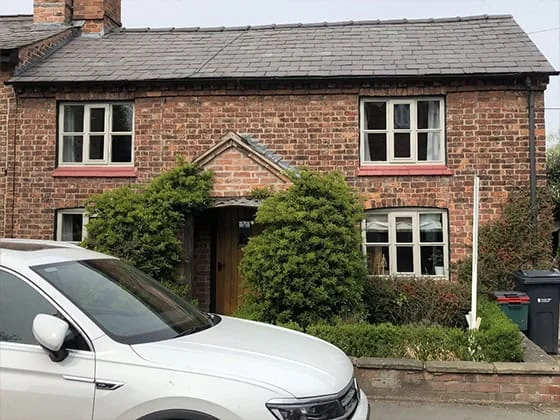
Brick cottage elevation after repointing, with a more defined joint finish across the frontage
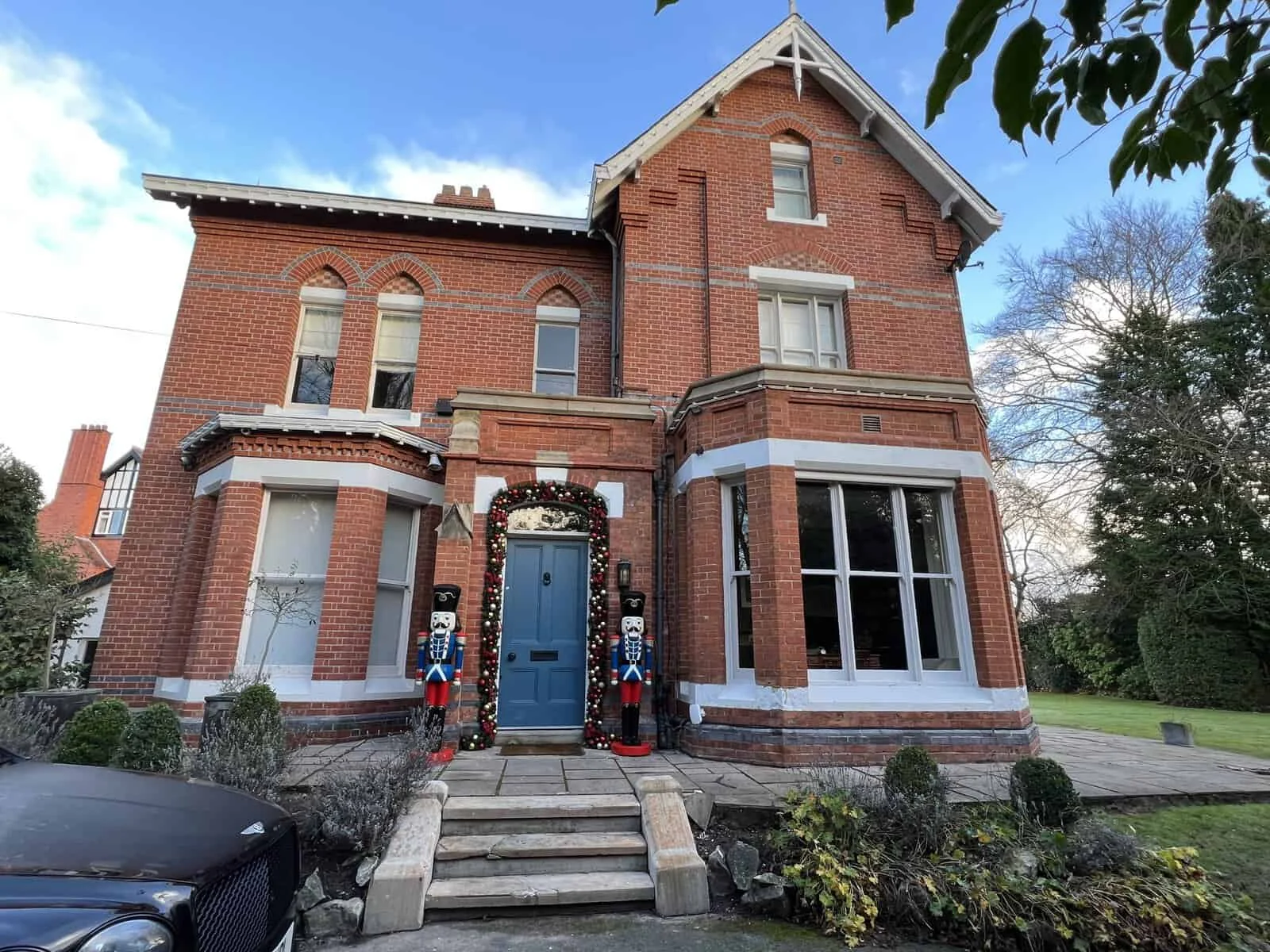
Victorian red-brick house with arched window details, contrasting brickwork and mortar joints
Brick type, previous repair areas and decorative details all influence a compatible repointing approach.

Mortar, brick and finish

Choose a repair that works with the existing masonry.

Older and newer brickwork can behave differently. Existing mortar, brick hardness, joint shape, wall exposure and previous repairs all help guide the material and finish that should be considered.

A lime-based mortar may be appropriate for some traditional walls. Elsewhere, another compatible option may be better suited. The important point is to match the decision to the construction and condition of the individual property.

Talk through mortar options

A clear working route

From the first site look to a protected, finished elevation.

Preparation, mortar choice, application and aftercare are connected steps. Keeping them together helps make the scope clear and keeps the conversation centred on the masonry itself.

01

Survey the masonry and set out the scope

We look at the affected mortar, brick faces, rainwater details, access and any repairs that should be addressed alongside repointing. The proposal is based on the wall in front of us, not a standard area rate.

02

Prepare suitable joints and apply compatible mortar

Where renewal is appropriate, failed mortar is carefully removed and joints are prepared before the selected mortar is worked in to suit the agreed profile and the surrounding brickwork.

03

Protect the work and make the handover clear

Fresh pointing is protected from unsuitable weather and rapid drying as needed. We keep the area tidy and review the finished work, alongside any related repair or maintenance points already discussed.

Plan your enquiry

Show us the full elevation as well as the affected mortar.

Close photographs are useful, but a wider view helps show the scale of the wall, the relationship to openings and gutters, and any access or weather exposure that may influence the scope.

  • A wide photograph of the whole elevation, including the roofline, ground level, gutters and any areas that receive driving rain
  • Close views showing recessed, open, cracked or earlier patched mortar, plus any loose, spalled or fractured bricks
  • Any context about damp marks, overflowing rainwater goods, previous repairs, changes in the wall or access around the property
Request a brick-repointing quote

Brick repointing FAQs

Questions about renewing mortar joints.

These answers cover the common points to consider before a repointing scope is agreed. The materials, condition and exposure of every property still need individual assessment.

What is the difference between brick pointing and brick repointing?+

Pointing describes the mortar finish visible at the face of a joint. Repointing is the repair process of renewing mortar where it has failed or weathered back. On a particular wall, the right scope depends on which joints genuinely need renewal.

How do I know whether my brickwork needs repointing?+

Cracked, loose, recessed or missing mortar can be a reason to arrange an assessment. It is also worth looking at the condition of the nearby bricks, rainwater goods and the wider elevation before deciding what work is needed.

Will every mortar joint be removed?+

No. Sound mortar is not automatically removed. A localised repair may be suitable where weathering is uneven, while a larger area can be discussed when the condition of the elevation supports it.

Which mortar is right for my property?+

The appropriate material depends on the brickwork, existing mortar, joint profile, age and exposure of the property. A lime-based mortar may be appropriate for some traditional masonry, while another compatible option may suit other construction.

Can you match the existing mortar colour and joint finish?+

Existing sheltered sections, the mortar texture, colour and joint profile all help guide a match. A sample or trial panel can be useful when a consistent appearance across a visible elevation is important.

Will repointing fix a damp problem?+

Repointing can help a suitable wall manage weather, but it should not be expected to hide another cause of damp. Gutters, drainage, flashings, ventilation, cracks and ground levels may need to be checked as part of the discussion.

Can damaged bricks be repaired during the same visit?+

They can be assessed alongside the joints. Cracked, spalled or loose bricks may need local repair or replacement before the final pointing work is completed, so they are worth showing in the first photographs.

What should I include in a brick-repointing enquiry?+

Please include a broad view of the wall and close views of the affected joints. Details about height, access, water run-off, prior repairs and any changes you have noticed will help make the initial conversation more useful.
Brick repointingGet a quote

Speak to somebody today.

Call 01625 920 888, or for the fastest way to get a quotation, click Get a quotation and fill in your details.

Get a quotation