Make the entrance safer
A loose, chipped or uneven step can be a trip risk. Looking at the step, its bedding and the route around it helps identify where repair work should begin.
Staffordshire Pointing is part of the Cheshire Pointing Group Limited, (established 2003).
Bullnose step repair
A worn, loose or damaged stone step can affect safe access and the character of an entrance. We assess the profile, material and surrounding masonry before discussing a repair or replacement route.
A clear starting point
Bullnose step repair starts with assessing the stone, rounded front edge, remaining sound material, joints and bedding. A local repair may be suitable when enough sound material remains; extensive fractures, rocking or severe wear may make replacement more dependable. Staffordshire Pointing also considers surrounding masonry, water run-off and entrance access before discussing a scope. Wide entrance photographs and close views of damage help inform the initial discussion.
Explore the Staffordshire repointing guideA considered service
Bullnose steps are defined by the rounded front edge that softens the line of an entrance. Wear, impact damage, loose bedding, open joints and earlier patches can leave that profile uneven and make the route underfoot feel less secure.
The right way forward depends on the stone, the sound material that remains, the original profile and how the step connects to the doorway, brickwork and path. Local repairs, a new step and associated masonry work should all be considered around the property itself.
Discuss your property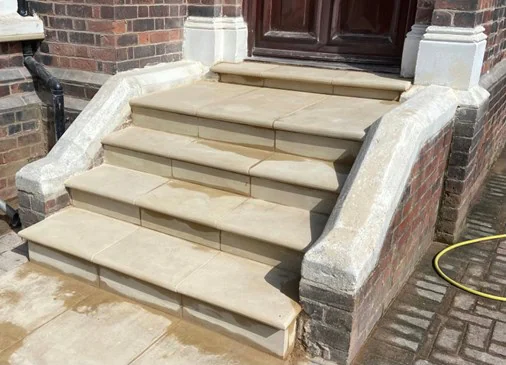
Why deal with a damaged step
A damaged entrance step is more than a visual distraction. Its profile, support and surrounding masonry all affect how the threshold performs day to day.
A loose, chipped or uneven step can be a trip risk. Looking at the step, its bedding and the route around it helps identify where repair work should begin.
The rounded nosing, rise and relationship to the surrounding brickwork all contribute to the character of an older entrance. A repair should respect those visible lines.
Open joints, failed bedding or poor water run-off around a step can affect nearby masonry. Addressing them together can help avoid a short-lived cosmetic fix.
Material and profile
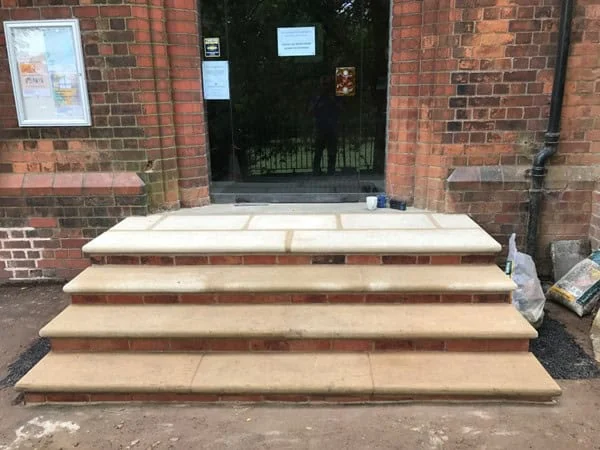
Stone bullnose steps can be formed in a range of materials, colours and finishes. Their appearance depends on the rounded nosing, individual treads, joint lines and the way the entrance meets the building.
Where a repair or replacement is appropriate, the aim is to create a sound, practical step that sits naturally with the doorway and masonry around it. The right specification depends on the existing profile, remaining sound material, the level of wear and how water leaves the entrance.
Discuss your entrance stepPlan the repair clearly
A complete photograph of the steps, the doorway and the surrounding brickwork gives a better first impression than a close-up of a damaged edge alone. It helps us understand the rise, landing, side walls and access before discussing the likely scope.
Our projects
Take a look at some of the work we have completed, from the repair work and materials used through to the finished result.
Helpful reading
Explore the relevant detailed guides below. They support, rather than replace, an assessment of the individual building.
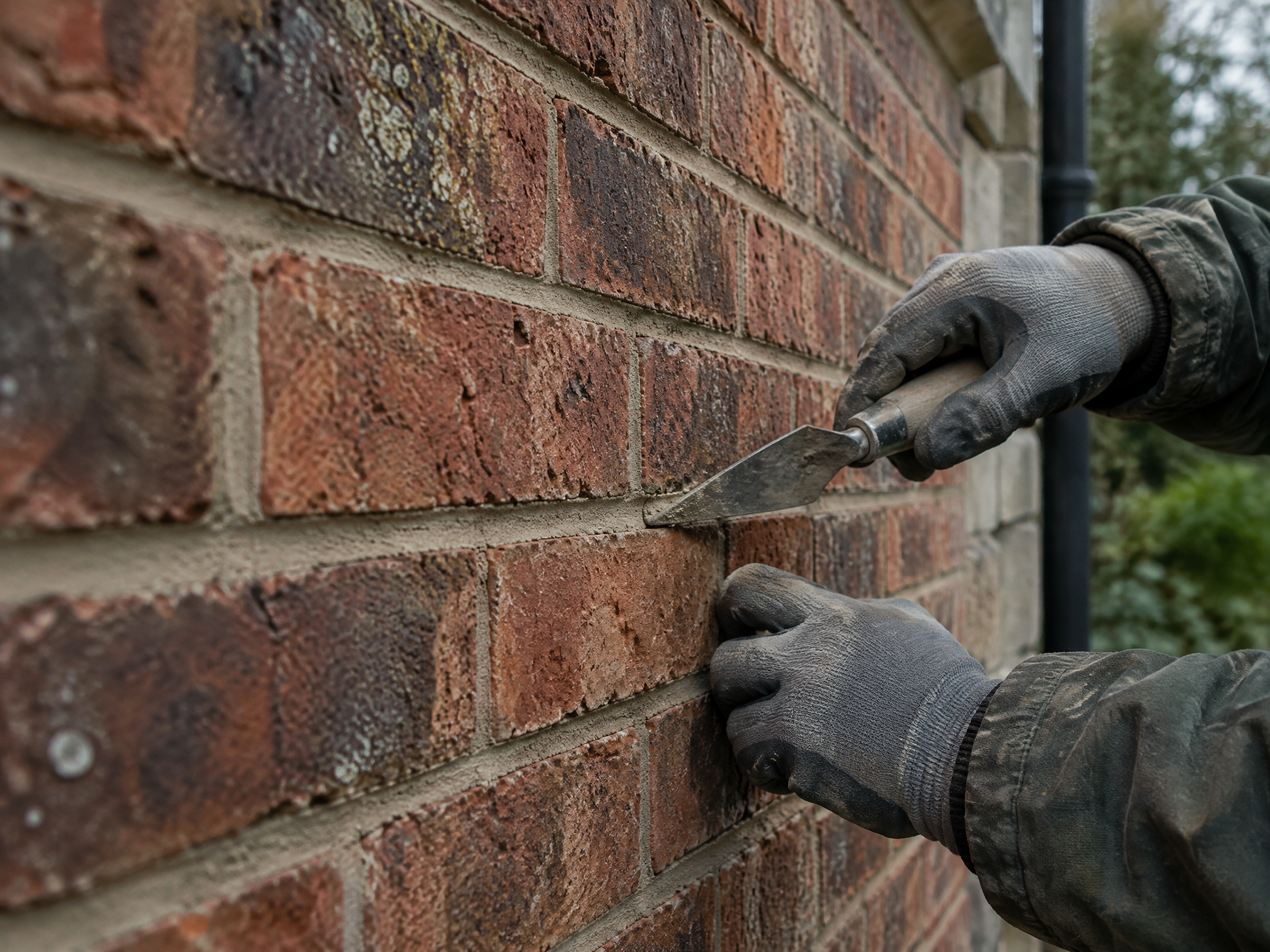
For the wider picture, start with the homeowner’s repointing overview covering condition, materials, safe access and repair planning.
Property maintenance guide8 minute read
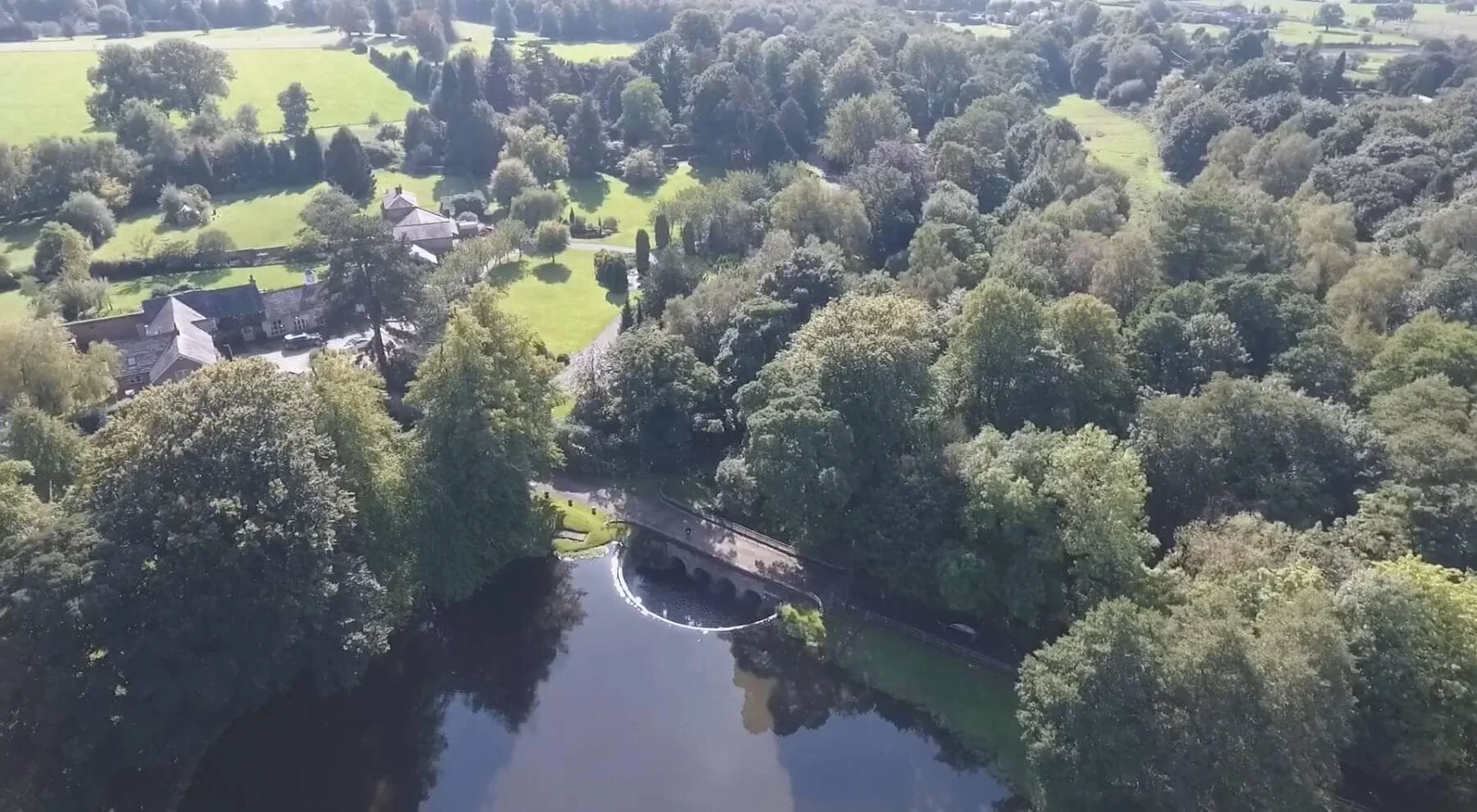
Heritage property guide10 minute read
FAQs
Every property has its own material, condition and access considerations. These answers explain the points we would normally discuss before a scope is agreed.
A bullnose step has a rounded front edge rather than a sharp square corner. The detail can be formed in natural stone or other masonry materials, and its exact shape, finish and size vary from one entrance to another.
Local repair may be considered where there is enough sound material to retain a safe, convincing profile. The step, its bedding and any cracks or movement need to be assessed before deciding whether repair or replacement is the more dependable route.
A replacement may be worth discussing where the stone is extensively fractured, rocking, badly worn through the nosing or has lost too much material to form a sound edge. The decision depends on the existing step and its surrounding support, not the visible surface alone.
The existing profile, dimensions and finish are important references when a step is repaired or replaced. A close result depends on the available material and the condition of the original entrance, so it is best discussed from photographs and an on-site assessment.
The finish needs to suit the material, setting and use of the entrance. It should consider grip, how the profile will weather and how the step sits alongside the threshold and adjacent masonry rather than simply aiming for a polished appearance.
Yes. Step work can be discussed alongside damaged brick edges, failed joints, side walls, coping details and local water-shedding concerns, so the entrance is considered as one connected area.
Please include a wide view of the whole entrance, closer photographs of the damaged edge or joint, and a view showing where the step meets the doorway, brickwork or path. This gives a better first view of the profile and access.
Use the quotation form to send the property postcode, a wide photograph of the entrance and close-up images of the damaged areas. We can then discuss the condition and whether a site visit or a more detailed scope is the sensible next step.
Call 01625 920 888, or for the fastest way to get a quotation, click Get a quotation and fill in your details.