Chimney repair planning guide
Chimney repairs: what needs fixing and how to plan the work
Noticed mortar falling from your chimney, a damaged pot or damp around the chimney breast indoors? You may need a small repair, work at the top of the chimney or help with the roof junction — not necessarily a complete rebuild.
Start with safe ground-level observations. This guide explains what needs urgent attention, how access and repair choices affect the price, and why checking the brickwork is separate from checking whether a fire or stove is safe to use.
Genuine Cheshire Pointing archive photograph taken during chimney repairs in Cheshire. Work is under way; this is not a completed-stack photograph.
Key takeaways
- Falling material, new leaning or badly displaced brickwork needs urgent attention, not a routine pointing quotation.
- Damp may come from the roof junction, chimney top or flue as well as damaged mortar. Find the cause before choosing the repair.
- Safe access can be a substantial part of the cost, even when the area needing repair is small.
- A masonry repair does not certify a working flue or appliance, and a shared chimney needs ownership and permission checks.
What can you see, and is it urgent?
The chimney stack is the brick or stone part rising above the roof. Look at it from the ground, using a zoomed photograph if that helps. Do not climb onto the roof or use a ladder to investigate, remove loose material or carry out a repair.
Notice whether the concern is missing mortar between otherwise intact bricks, broken brick faces, a pot that has moved, or a change in the shape of the stack. These are different problems and may need different people involved.
A few gaps between bricks, with no obvious movement
What it might mean: Local mortar repairs may be enough if the surrounding stack is in good condition. Gaps alone do not mean it all needs rebuilding.
What to do: Take a full-stack photograph from the ground and arrange a repair assessment. Record when you first noticed the gaps.
Broken brick faces or a cracked chimney pot
What it might mean: Fresh mortar will not mend a damaged brick or secure every pot problem. Brick replacement or work to the pot and its support may be needed.
What to do: Mention these separately in your enquiry so they are not overlooked in a repointing price. Keep clear if anything looks loose.
The stack is leaning, bulging, badly cracked or shedding material
What it might mean: There may be a stability problem or an immediate falling-material hazard. Covering the cracks with mortar is not a suitable response.
What to do: Keep people away from the affected area and seek urgent professional help. Structural concerns may need a structural engineer or building surveyor; do not wait for a routine website enquiry response.
Will repairing the chimney stop the damp?
It might, but only if the repair deals with the way water is getting in. Flashing is the weatherproof material, often lead, around the joint between the chimney and roof. A defect there, damaged nearby roof coverings or a problem at the chimney top can cause damp even when the mortar looks sound.
Flaunching is the shaped mortar surface around the bases of chimney pots, intended to shed rain. Damage here is a different repair from renewing mortar between bricks. An open flue — the passage carrying smoke and fumes through the chimney — can also admit rain.
Brown staining on a chimney breast is not always a roof leak. Historic England explains that condensation in poorly ventilated, disused or rarely used flues can carry soot and tar into the plaster. Tell the assessor whether marks follow rain, cold weather or use of the fire. Ask them to explain the likely cause and any separate roof or flue work, rather than treating repointing as a guaranteed cure.
Why does safe access matter so much?
A small chimney repair can still need substantial access equipment. The contractor needs to reach the relevant sides, work safely and protect people below from falling tools or debris. The height of the house, roof shape, position of the stack and space around the building all affect the arrangement.
Scaffolding may be needed, but the right solution must be planned for the property and work involved. A tall ladder is not a substitute for a safe working plan. HSE guidance covers roof repair and maintenance, including the people arranging the work.
Tell the contractor about a conservatory, narrow passage, sloping ground, overhead cables or a stack close to a pavement. Ask where equipment will stand, which entrances remain usable, whether neighbouring land or public space is involved, and who will arrange any access permissions. Agree how a closer inspection will be carried out and paid for if it is needed before the final repair price can be settled.
What does the repair actually involve?
Ask for the work to be described in plain English: which parts will be repaired, what will be kept and why. Repointing renews damaged mortar between bricks; rebuilding takes down and reconstructs part of the stack. They are not interchangeable.
On an older chimney, retain sound original bricks and pots where possible. Suitable mortar needs to work with the existing brickwork and withstand the chimney's exposure. SPAB normally recommends lime-based mortar without cement for older stacks; that does not give every chimney the same mix. Soft historic mortar alone is not proof that it has failed.
Check the accessible chimney and agree the repair
Identify damaged joints, bricks, pots and top details, as well as the roof junction. If closer access reveals more damage, agree how the proposed work and price will be updated before extra work proceeds.
Set up access and protection
Plan safe working positions and protection for the roof, nearby windows and people below. Agree arrangements for debris, equipment and any areas you should avoid while work is under way.
Carry out the agreed masonry and top repairs
For repointing, remove defective mortar carefully and fill the prepared joints with suitable fresh mortar. Replace damaged bricks or repair the pot supports and flaunching where specified. If an upper section needs rebuilding, the plan must address its stability and effects on any flues.
Protect the new work and explain what remains
Fresh mortar needs appropriate protection while it sets. Agree checks, clearing debris and any aftercare. Roof, flue or appliance work should be identified separately, with clear responsibility for any checks needed before a fire or stove is used again.
A chimney needs more than a new mortar finish
Cheshire — original project archive
Genuine photographs from the Cheshire Pointing project archive; Staffordshire Pointing is part of Cheshire Pointing Group Limited. This is not a Staffordshire project.
The first photograph shows damaged upper brickwork and broken mortar around decorative chimney pots. The later photograph shows renewed upper courses and a new mortar bed while the repair is under way. Cracks in the pots remain visible; the later view is not presented as a fully finished or safety-certified chimney.
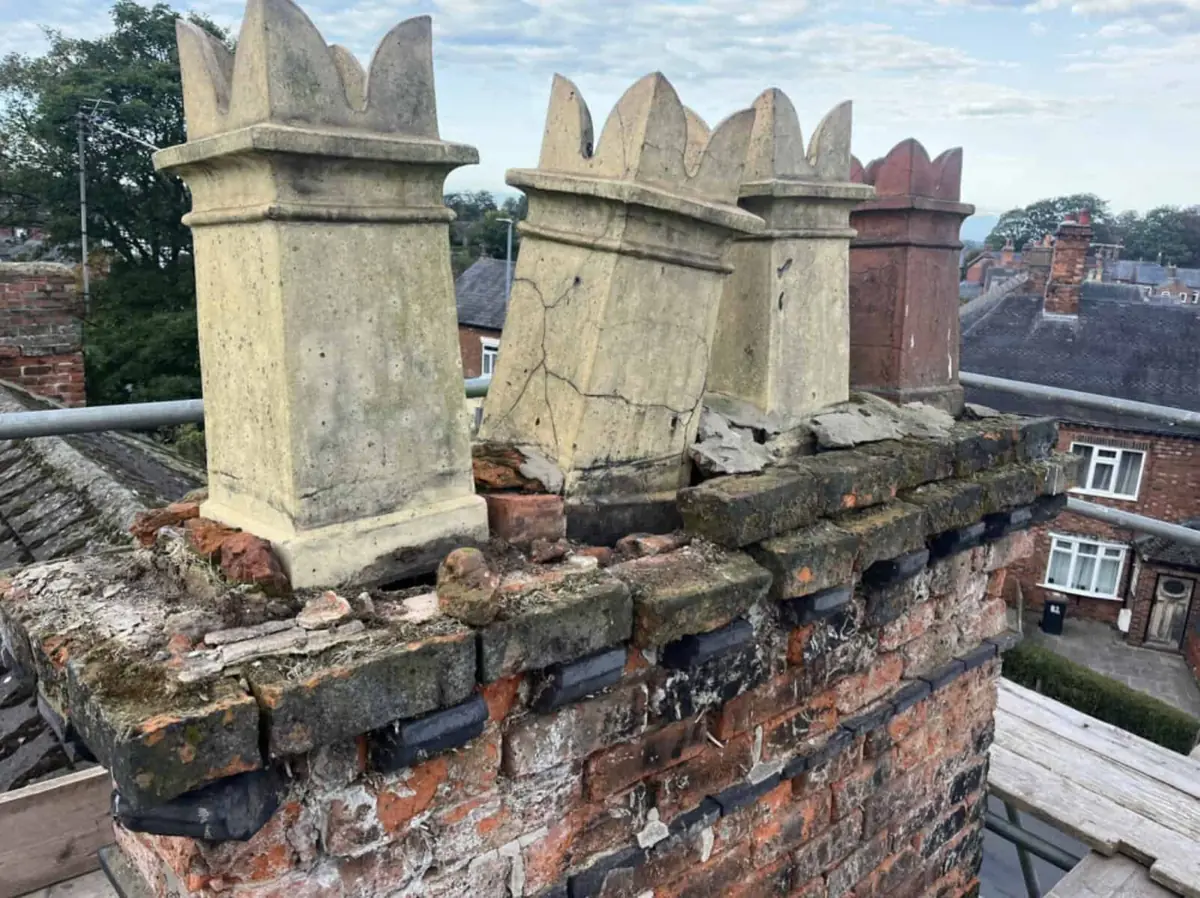
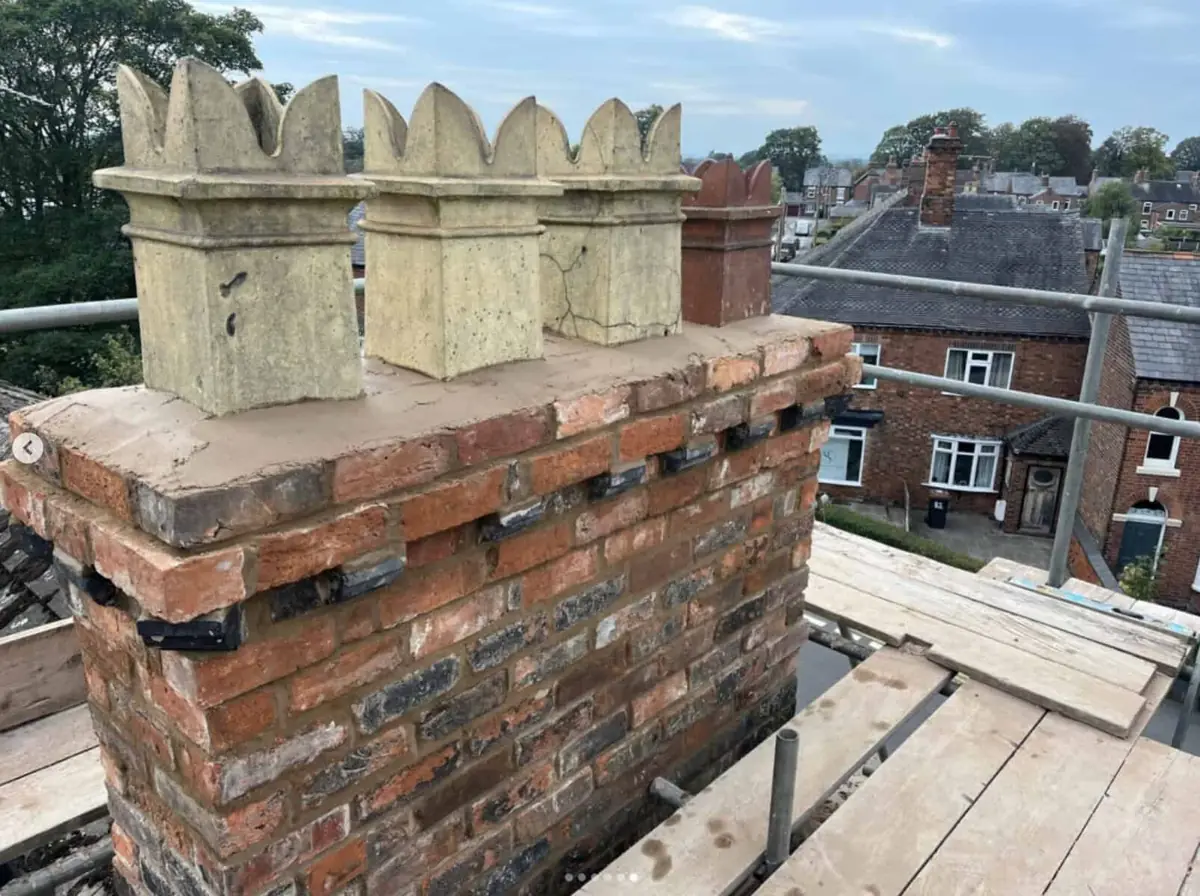
What this example shows: Pointing the joints and repairing the chimney top are different jobs. Ask which bricks, pot supports and roof details need attention, and what remains to be done. These photographs do not identify the mortar mix or certify a flue or appliance.
Read the full Cheshire — original project archive case studyIs the chimney still connected to a fire, stove or boiler?
Tell everyone involved which appliances use the chimney, including any in a neighbouring property. One stack can contain several separate flues. Repairing the outside does not establish that those passages are sound or suitable for the appliances connected to them.
If you suspect a flue defect or smoke is entering a room, stop using the affected appliance and obtain appropriate safety advice. Solid-fuel matters need a competent solid-fuel professional, such as a HETAS Registered Installer; gas appliance and flue work needs an appropriately qualified Gas Safe registered engineer. Do not attempt DIY gas or flue work. Naming these organisations is not a claim that the masonry contractor holds those registrations.
HETAS explains that the installer must be satisfied the chimney is free from defects and suitable for its intended use. Ask who will assess the flue, whether the masonry work affects it, and what needs checking before use resumes.
An unused chimney still needs maintenance. Blocking it completely can encourage damp because the flue needs some ventilation. Seek advice on a suitable ventilated arrangement rather than simply sealing the top or removing the stack. Removal is a separate structural and permissions decision, not a routine repair.
Shared or listed chimney? Check before work starts
On a semi-detached or terraced house, a chimney may be shared even if only one side looks damaged. Check ownership documents and speak to the adjoining owner early. Agree who is commissioning the work, how each property's flues will be protected and how costs will be handled. Do not assume the bill must be split equally.
Work to a shared structure may fall under the Party Wall etc. Act 1996. Get advice from a party-wall surveyor where needed about your proposed repair and whether formal notice is required. The Act is separate from planning permission and building regulations; an informal conversation with a neighbour does not replace a required notice.
If the building is listed, ask the local authority's conservation team about the proposed work before it starts. Work affecting its special character needs listed building consent in advance. Chimney pots, brick patterns and the stack's shape can be important features, so do not assume that calling something a repair makes it exempt. Conservation areas can also have planning controls.
Keep dated photographs, survey comments, any approvals and a record of the materials and work agreed. If there is an immediate danger, seek urgent professional and local-authority advice rather than attempting emergency roof work yourself.
What affects the price, timing and disruption?
Think about the whole job, not just the number of damaged joints. A few mortar repairs on a high central stack may still need a substantial scaffold. Replacing upper brickwork and re-bedding pots adds work that a repointing-only price does not include. Separate leadwork, roof repairs or flue checks can add other trades and visits.
Removal of old mortar or brickwork can be noisy and dusty. Equipment and debris handling may affect a drive, garden or entrance. Ask what will be protected, how dust and falling debris will be controlled, where materials will go and what clearing up is included. Do not assume these arrangements are identical in every quotation.
Ask whether you can remain in the house and whether an affected fire or stove must stay out of use. The answer depends on the repair and safety arrangements. Wind, rain, frost and the mortar's protection needs can change the working schedule, so get a property-specific programme rather than relying on a standard number of days.
- Which sides and parts of the stack are included, and is any rebuilding allowed for?
- Are damaged bricks, pots, flaunching and roof-junction repairs included or excluded?
- Does the price cover access equipment, its hire period and any permissions?
- Who handles flue or appliance checks, and are those separately priced?
- What protection, waste removal and aftercare are included?
- How will newly discovered defects, extra costs or weather delays be discussed?
What should you send with an enquiry?
You do not need to name the repair. Send your postcode, a photograph showing the full chimney and roof, and closer views only where you can take them safely from the ground. Include indoor staining if relevant, what changed and when, and whether the problem is getting worse.
Mention appliance use, shared ownership, listed status, access restrictions and any survey report. Photographs help start the conversation, but hidden roof-level defects and internal flue conditions may need a closer assessment before a final price. If your concern is mainly mortar elsewhere on the house, the homeowner's repointing overview explains the wider signs and repair process.
Common questions
What homeowners often ask.
Does a chimney repair always mean rebuilding it?+
No. Some chimneys need only local mortar or brick repairs, while others need attention to pots, flaunching or part of the upper stack. Ask why each part needs repair or replacement and what sound material can be kept. Leaning or unstable brickwork needs structural advice, not simply new pointing.
Will repointing cure a leaking chimney?+
Only if damaged mortar is the cause and the repair addresses it. Flashing, roof coverings, chimney-top defects and condensation in a flue can also cause damp. Ask for the source of the moisture to be investigated before treating repointing as the solution.
Will a small repair still need scaffolding?+
It may do. The stack's height and position, the roof shape and the work involved matter as well as the repair size. Ask the contractor to explain the safe access arrangement and whether it is included in the price; do not try to reach the chimney yourself.
Can I use my fire or stove while the chimney is being repaired?+
Do not assume so. Tell the contractor what is connected and agree whether it must stay out of use, who will check the flue and what is needed before restarting. If you suspect damage affecting the flue or smoke is entering the room, stop using the appliance and seek appropriate safety advice.
Who pays if the chimney is shared with next door?+
There is no automatic answer from its appearance alone. Check ownership and any relevant agreements, then discuss the work and funding with the adjoining owner. Seek professional advice if responsibility is unclear, and check whether the particular work requires party-wall notice before it starts.
Can I just cap a chimney that is no longer used?+
A disused chimney still needs maintenance and ventilation. A suitable ventilated cap may help keep rain and birds out, but fully sealing the flue can encourage damp. Get advice on an arrangement suited to the chimney, and check shared ownership and heritage permissions before altering pots or the stack.
Sources behind the advice
Where to read more
We’ve used the following guidance for the repair, conservation and safety advice in this article. These organisations are references, not the authors of this page.
- The Society for the Protection of Ancient Buildings (SPAB)Chimney maintenance
Advice on weather exposure, maintenance and suitable mortar for older chimney stacks. It does not specify a repair for an individual property.
- Health and Safety ExecutiveWorking at height: A brief guide (INDG401)
Worker-safety guidance on preventing falls from height, including risks involving ladders and fragile roofs.
- Health and Safety ExecutiveHealth and Safety in Roof Work (HSG33)
Guidance for planning roof repair and maintenance safely, including people arranging or supervising the work and building owners.
- HETASDo I need my chimney lined?
Consumer guidance on flue suitability, competent assessment and work linked to a heating-appliance installation; not a certification of exterior masonry repairs or gas competence.
- Historic EnglandOpen Fires, Chimneys and Flues
Guidance on traditional chimneys, damp causes, working and disused flues, fuel-specific specialists and heritage controls affecting chimney alterations.
- Historic EnglandRepairing Walls of an Older Home
General older-brickwork guidance on water sources, matching repair materials, structural warning signs and seeking local-authority permissions advice.
- GOV.UKPreventing and resolving disputes in relation to party walls
Official guidance on party structures and notice for work covered by the Act in England and Wales. These procedures are separate from planning permission and building regulations.
Your brickwork
Not sure what needs doing? Start with what you’ve noticed.
Not sure whether the problem is the bricks, roof junction or chimney top? Tell Staffordshire Pointing what you have noticed. Send your postcode, full-area and safe closer photographs, symptoms and timing, or phone 01625 920 888 — you do not need building vocabulary to start the conversation.
Staffordshire Pointing aims to respond to website enquiries within 48 hours. Photographs can help identify the next assessment questions, not confirm that a chimney or appliance is safe. Falling material or suspected instability needs urgent professional help rather than waiting for a routine reply.